
Barqi Tojik Debt for Rogun Hydropower Project Reaches 983.2 Million Somoni
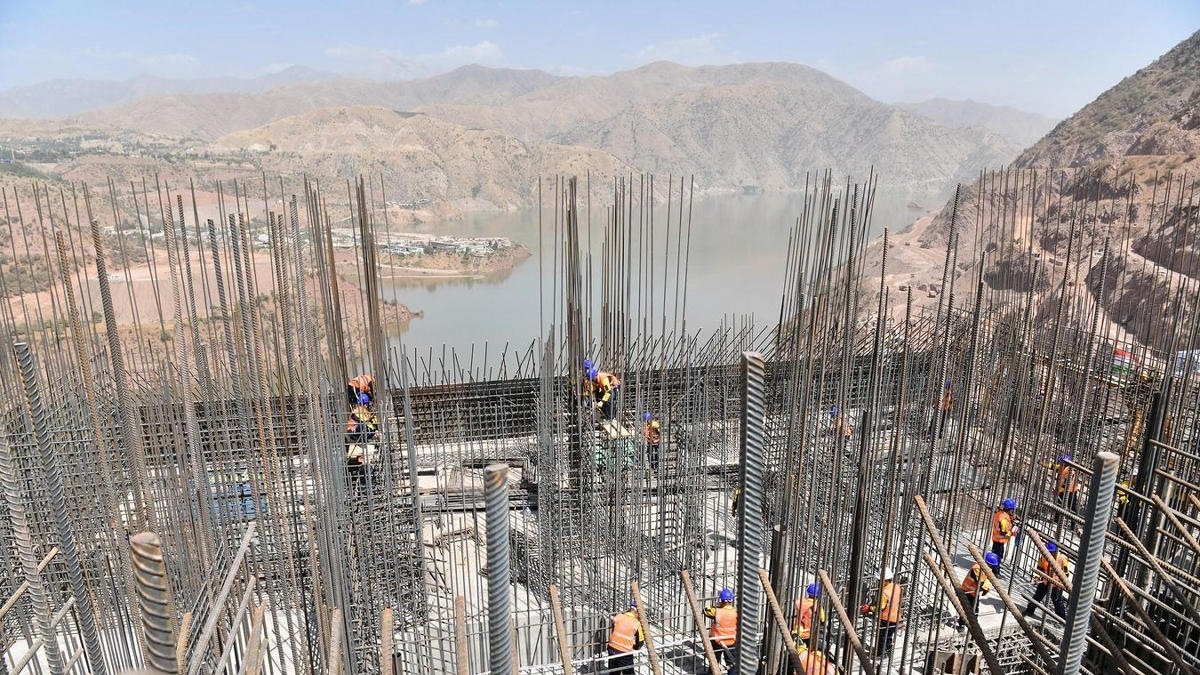
Tajikistan’s state energy holding company, Barqi Tojik, concluded the first three quarters of 2026 with an outstanding debt of 983.2 million somoni for construction work on the Rogun Hydropower Plant. According to corporate financial reports, the company’s liabilities toward the project began to increase again in early autumn, interrupting a six-month period of debt reduction.
The debt peaked in February of the current year at 1.13 billion somoni, up from 1.1 billion in January, before the company began incremental payments to contractors. The sharpest reduction occurred in May – a decrease of 118.4 million somoni. In June, the debt fell below the one-billion-somoni mark for the first time, reaching a low of 961.6 million by August. While the corporate documents do not provide a specific reason for the September increase to 983.2 million somoni, total liabilities remain 117 million somoni lower than at the start of the year.
The construction of the Rogun Hydropower Plant on the Vakhsh River represents one of the longest-running infrastructure projects in the post-Soviet region. Preparatory works originally commenced in 1987 but were halted following the dissolution of the Soviet Union and the subsequent civil war in Tajikistan. Attempts to resume the project during the 2000s were repeatedly delayed by a lack of large-scale funding until a full restart was initiated in 2016.
The total cost to complete the facility is estimated at $6.3 billion. The project features a 335-meter-high rock-fill dam – the tallest in the world. Upon the installation of all six hydroelectric units, the plant’s total capacity will reach 3.6 GW, establishing Rogun as the largest power generation facility in Central Asia. The station is designed as a multipurpose facility for electricity generation and water flow regulation.
The hydropower plant currently operates at a partial capacity with two active units. The first unit began generating electricity on September 9, 2018, followed by the synchronization of the second unit with the national grid in 2019. Data from the Ministry of Energy indicates that these turbines produced more than 1.2 billion kWh of electricity during 2024.