
Uzbekistan to Build Five Flood-Control Reservoirs to Boost Agriculture
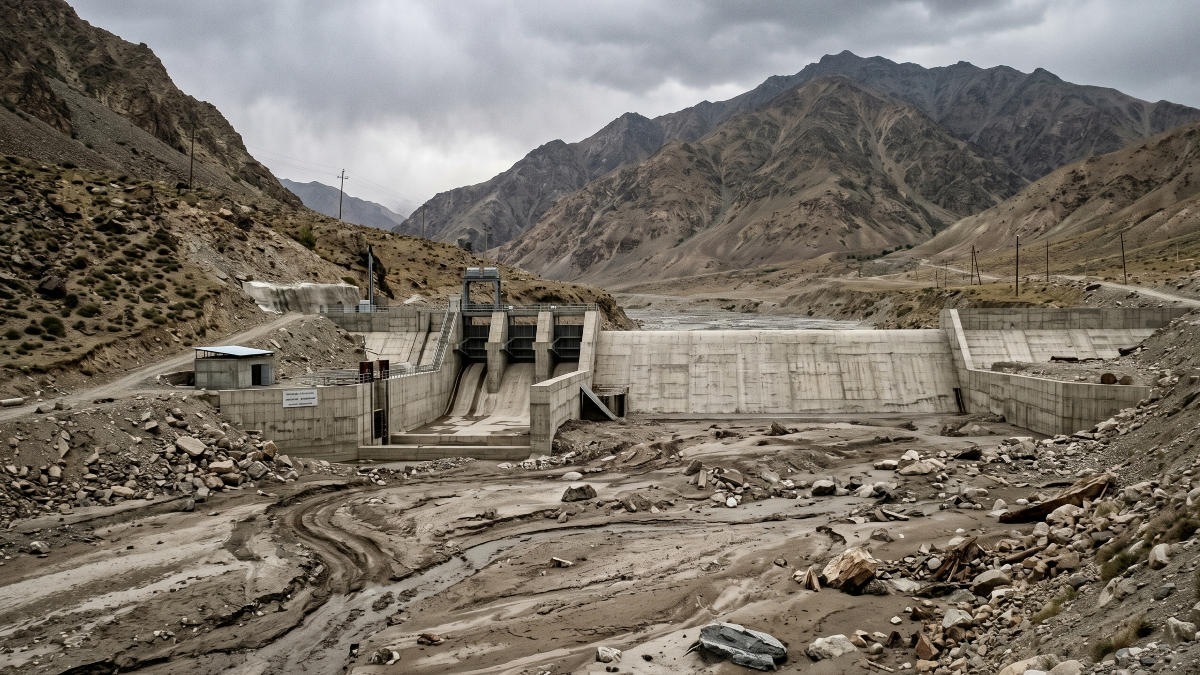
In May, torrential rains in Uzbekistan triggered destructive mudflows that flooded highways and residential areas, resulting in the death of a shepherd in the Qashqadaryo Region. In response to the increasing frequency of extreme weather events, the government of Uzbekistan has decided to capture and utilize these seasonal torrents for agricultural purposes.
By 2030, Uzbekistan will construct five specialized flood-control reservoirs across three regions – Tashkent, Samarkand, and Jizzakh. These hydraulic structures are designed to protect downstream settlements and retain floodwaters. The captured water is expected to improve irrigation on more than 9,000 hectares of existing agricultural land and bring an additional 3,600 hectares of new arable land into circulation, supporting the local agricultural sector and generating employment.
The largest of the planned facilities is the Aktepasay Reservoir in the Koshrabad District of the Samarkand Region. With a capacity of 26 million cubic meters, its construction is estimated to cost 365 billion Uzbek soums. Two smaller facilities – the Gizhduvansay and Chashtepasay reservoirs – will also be built in the mountainous Urgut District of the Samarkand Region. In the Jizzakh Region’s Bakhmal District, the Tangatopdisay Reservoir will be constructed at a cost of nearly 1 trillion soums. The fifth facility, the Aksakatasay Reservoir with a capacity of 7.6 million cubic meters, will be located in the Bostanlyk District of the Tashkent Region.
The infrastructure program will utilize a mixed financing model. The Samarkand projects will be funded directly from the state budget. The design phase for the reservoirs in the Tashkent and Jizzakh regions will be financed by Agrobank, while the construction phase will be executed by private investors through public–private partnership frameworks. Upon completion, all hydraulic facilities will be transferred free of charge to the Ministry of Water Resources of Uzbekistan. The land required for construction will be acquired for public use, with compensation provided to the property owners.
To attract private investment for the protective infrastructure, the government is offering economic incentives. Private partners will receive the rights to establish tourism, recreational complexes, and fish farms within the protective buffer zones of the reservoirs. The land for these commercial activities will be provided on a rent-free basis for 49 years, with the option for renewal. Additionally, the state will fund the construction of external access roads and utility connections to these recreational sites. Commercial activities will be permitted on the condition that they do not compromise dam safety.
The construction of these five reservoirs represents the initial phase of a broader national effort to manage spring floodwaters. Specialists from the Ministry of Water Resources, relevant scientific research institutes, and local administrations have surveyed the country’s territory and identified 60 additional sites suitable for the construction of small-scale reservoirs. Over the coming months, government agencies will assess the economic viability of these potential projects to establish a long-term development plan for the national water infrastructure.