
World Bank Rejects Investigation into Tajikistan’s Controversial Rogun Dam
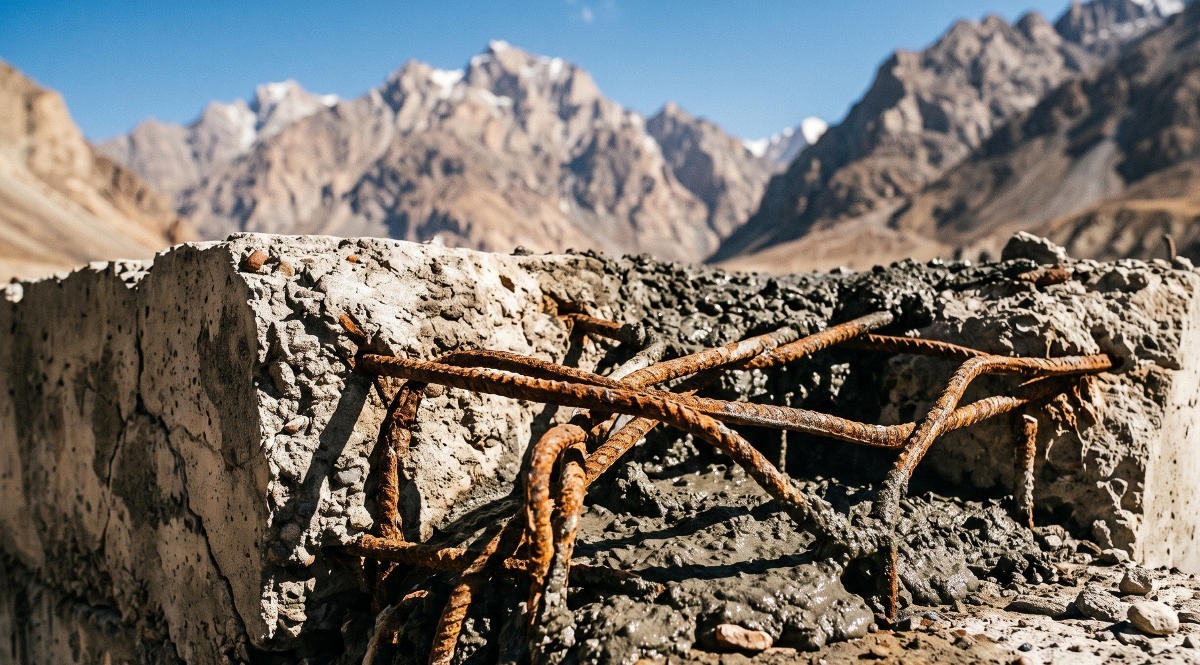
Tajikistan is proceeding with the construction of the world’s tallest dam – a project supported by a significant World Bank loan despite allegations of procedural violations. A key factor in the development of the facility is Tajikistan’s membership in the World Bank’s Helvetistan voting group, a bloc led by Switzerland.
The Rogun Dam is planned to reach a height of 335 meters, making it the largest hydropower plant in the world. President Emomali Rahmon has described the construction of the facility as a matter of “life and death” and a critical solution to the country’s energy crisis, particularly during the winter months. The total cost of the megaproject is estimated at 6.29 billion dollars.
The World Bank’s financial support marks a strategic shift in its lending policy. Between 2014 and 2024, the institution funded only one other large-scale hydropower project, reflecting institutional concerns over the long timelines and the significant environmental and social impacts associated with such dams. In early 2024, the bank approved an initial 350 million dollar credit for Rogun, joined by the European Union and the European Bank for Reconstruction and Development.
Tajikistan joined the Swiss–led Helvetistan voting group in 1992. Through this arrangement, a Swiss executive director represents the interests of several Central Asian and Eastern European nations on the World Bank’s Board of Directors – the body responsible for approving project funding. The Swiss State Secretariat for Economic Affairs has acknowledged the project’s strategic importance for regional energy integration and security.
Despite these strategic goals, the Rogun Dam has remained controversial for decades. Construction will require the resettlement of at least 40,000 people. Human Rights Watch documented human rights violations during earlier resettlement phases as recently as 2014. Environmentalists also warn that the project could endanger the Tigrovaya Balka nature reserve – a UNESCO World Heritage site – and negatively impact biodiversity in the Amu Darya River, particularly its rare fish populations.
The site is located in a high-seismic risk zone, near the epicenter of a major 1949 earthquake that triggered a landslide and buried two villages. Critics suggest that a lower dam height could have significantly reduced the number of displacements. Furthermore, wind and solar power have been proposed as more immediate and cost-effective alternatives, as the Rogun plant is not expected to be fully operational until 2033.
The Tajik government’s insistence on a 335–meter height, which is 50 meters higher than what international experts recommended, underscores the dam’s symbolic importance to the administration. International support for the project is also viewed through a geopolitical lens. Analysts suggest that Western nations and the World Bank are seeking to bolster influence in Central Asia. While Russia is not involved in the current financing, the European Union has committed its largest-ever investment in a single hydropower project to the Rogun dam.
Originally started in 1959 under the Soviet Union, the project resumed in 2008 and is currently approximately 30 percent complete. Recent funding decisions have faced opposition from within the World Bank’s oversight framework. In February 2025, individuals from Uzbekistan and Turkmenistan filed a formal complaint with the bank’s Inspection Panel. They alleged that the environmental and social assessments were outdated and failed to address the impact of reduced water flow on downstream ecosystems.
World Bank management initially dismissed the complaint, arguing that the claimants resided outside Tajikistan. However, the Inspection Panel ruled that downstream impacts in neighboring countries are valid grounds for a grievance. Despite the Panel’s recommendation to launch a full investigation, the World Bank Board of Directors rejected the proposal in November 2025.
Eugene Simonov, a coordinator for the international coalition Rivers without Boundaries and an advisor to the complainants, noted that the Board typically accepts such recommendations without objection. The decision to block the investigation has sparked concerns regarding the influence of voting group dynamics on the bank’s accountability. While Switzerland has not disclosed its specific vote, the State Secretariat for Economic Affairs confirmed that the government analyzed the complaint and the Panel’s recommendation before the Board concluded the process.
The refusal to investigate has led to broader criticism of the World Bank’s oversight mechanisms. Unlike other development banks that have moved toward more independent appeals processes, the World Bank’s Board retains the final authority to block investigations. For the Rogun project, this decision effectively ends the formal oversight process, despite ongoing concerns regarding the project’s environmental and social consequences.