
Uzbekistan Caps Andijan Reservoir Capacity Under Border Pact With Kyrgyzstan
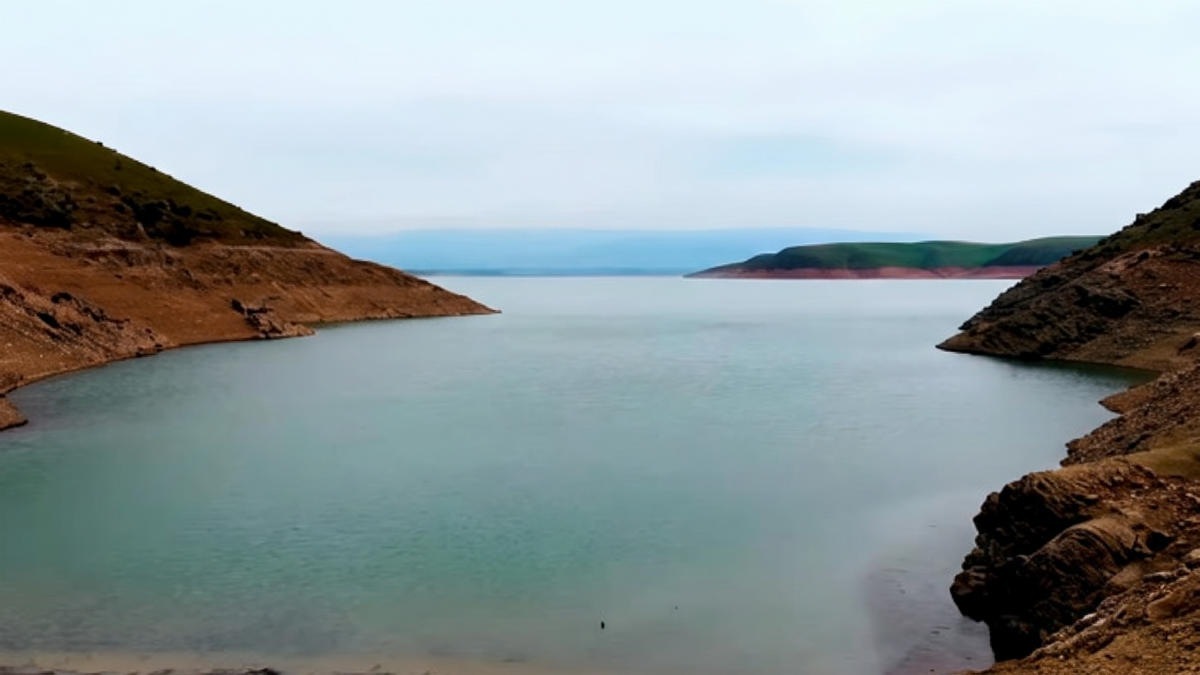
Uzbekistan has officially capped the maximum storage volume of the Andijan (Kempir-Abad) Reservoir at 1.574 billion cubic meters, approximately 17% below its original design capacity. The restriction is codified in bilateral agreements with Kyrgyzstan, which prohibit raising water levels to previous marks due to the risk of flooding border territories, Uzbekistan’s Minister of Water Resources Shavkat Khamraev announced during a session of the Legislative Chamber of the Oliy Majlis.
The clarification followed an inquiry from lawmakers regarding the condition of the reservoir basin, located near the city of Khanabad. Parliamentarians highlighted the natural siltation of reservoirs, noting that the accumulation of bottom sediments over time expands the so-called “dead storage” – the layer of water unusable for economic purposes – thereby reducing usable capacity. However, Khamraev said there are no immediate plans to dredge silt from the bottom of the Andijan Reservoir.
Khamraev explained that while the facility’s original design capacity exceeded 1.9 billion cubic meters, both countries limited the permissible water elevation during the settlement of border disputes. Because higher water levels submerge larger areas of land, a ceiling was set at around 905–908 meters above sea level, capping maximum reserves at 1.574 billion cubic meters. Consequently, the reservoir has effectively lost roughly 326 million cubic meters of its design capacity, though the Ministry of Water Resources considers the remaining volume sufficient to meet economic needs.
Current hydrological conditions remain well below even the revised limits. According to the ministry, the basin currently holds 692 million cubic meters of water – significantly less than in 2024, when reserves exceeded 1 billion cubic meters. Reduced inflows have forced operators to restrict water releases. Officials anticipate that under favorable conditions, accumulating around 1.5 billion cubic meters will provide enough reserves for the upcoming irrigation season and partially into the following year.
Water deficits and revised limits in this basin directly affect a vast water-use network across Central Asia. The Andijan Reservoir supplies irrigation systems not only in the Andijan region and the Fergana Valley, but also agricultural lands in the Bekabad district of the Tashkent region, as well as the Syrdarya and Jizzakh regions. In addition, two hydroelectric power plants operate at its dam. Amid the constraints in the Fergana Valley, authorities are seeking ways to expand the capacity of other facilities; at the Tuyamuyun Reservoir, for instance, plans are underway to reinforce the dam’s anti-seepage protection, which would increase its permissible volume from 6 billion to 7 billion cubic meters.
The current operating regime of the Andijan Reservoir is governed by a package of agreements signed in Bishkek on November 3, 2022, which entered into force in December of that year following ratification. Under the territorial swap, Uzbekistan received 4,957 hectares beneath the reservoir itself and 19.5 hectares for dam maintenance and security. Kyrgyzstan received 1,019 hectares of pastureland and an additional 12,849 hectares at the Govasai site as compensation for the unbuilt left-bank Kempir-Abad Canal.
The joint water management treaty obligates Uzbekistan to maintain water levels no higher than the 900-meter horizontal mark, permitting exceedances only during emergencies and force majeure events. Uzbekistan is responsible for the facility’s technical safety, operation, and water releases within agreed limits, and guarantees Kyrgyz citizens free access to the reservoir for livestock watering, crop irrigation, and fishing. Kyrgyzstan, in turn, is obligated to establish water protection zones and enforce environmental protection regulations along the adjacent shorelines.