
East Kazakhstan Plans 11 Small Hydropower Plants on Seven Altai Rivers
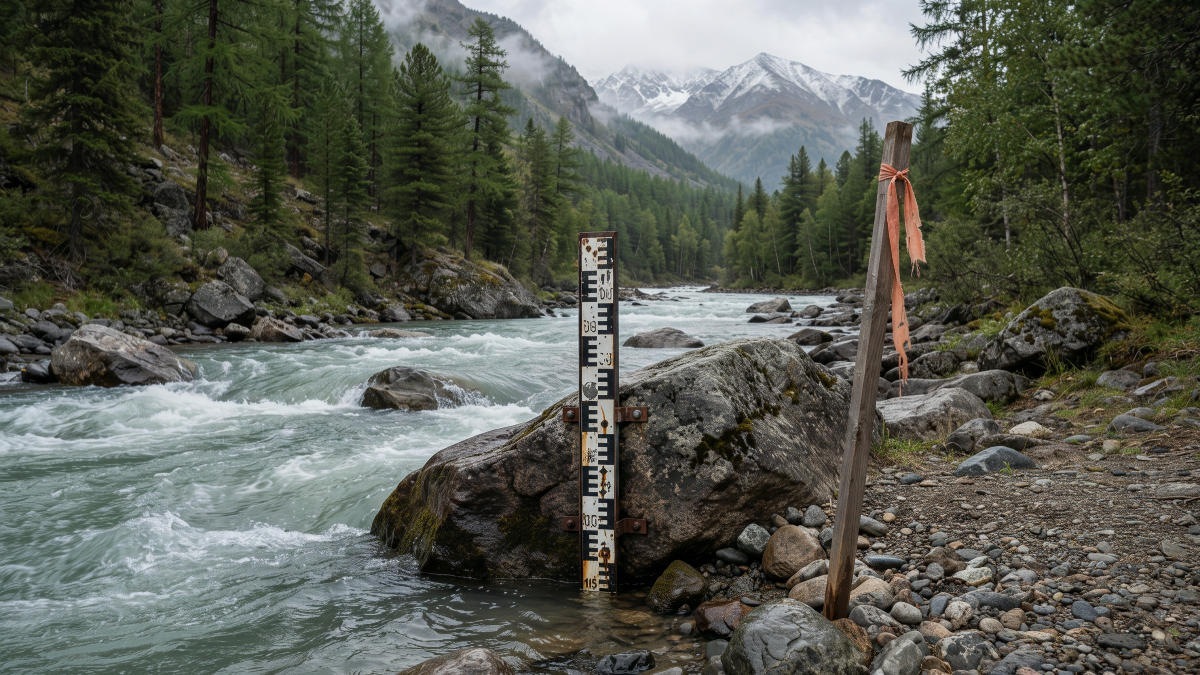
Authorities in Kazakhstan’s East Kazakhstan Region have selected seven mountain rivers for the construction of 11 small hydropower plants with a combined capacity of 170.3 megawatts (MW). Altay Hydro LLP plans to implement the projects in the Katon-Karagay and Markakol districts under a cooperation memorandum signed with the regional administration. Thus far, specific timelines and a tariff have been established for only one facility, while the total program cost, funding sources, and exact construction sites remain undisclosed.
According to the regional Department of Energy and Housing and Utilities, the majority of the generating capacity is slated for the Koba River basin. Plans include three stations totaling 59 MW on the Arasan-Koba River, two totaling 67 MW on the Kara-Koba River, and two totaling 19.6 MW on the Zhaman-Koba River. The remaining four facilities are distributed one each across the Kurty (9.8 MW), Fadikha (9.7 MW), Uryl (2.7 MW), and Shubaragash (2.5 MW) rivers.
Available data remain insufficient to evaluate potential impacts on mountain ecosystems and local communities. Officials have disclosed only the names of the watercourses and projected capacities, omitting the geographic coordinates of future dams and water intakes as well as distances to nearby villages. Construction schedules for 10 of the 11 facilities have not been set – the investor is expected to determine timelines following design and survey work. The energy department also did not specify capital expenditures per station or provide details on the company’s financial guarantees.
The sole project with confirmed parameters is the 2.711 MW plant on the Uryl River. According to the Kazakhstan Electricity and Power Market Operator (KOREM), Altay Hydro LLP won an auction for small hydropower projects held by the Ministry of Energy on September 4, 2026. The company plans to commission the facility before 2031 at an auction electricity rate of 41.19 tenge per kilowatt-hour, excluding VAT. The auction rate establishes only the future power supply tariff and does not reflect the actual capital investment required for construction.
The September auction reflected subdued market interest in small hydropower. Out of 50 MW offered nationwide, four eligible participants submitted price bids totaling 9.711 MW. Alongside Altay Hydro, the selected bidders were Orbulaq Energy LLP with a 3.6 MW project at 41.20 tenge per kWh, Kelesgidrostroy LLP with 2 MW at 41.21 tenge, and Europa Solar LLP with 1.4 MW at 41.23 tenge.
Corporate registry data show that the investor entity was established shortly before the plans were announced. Altay Hydro LLP was registered on March 2, 2026, under the leadership of Auez Saduov. Public records indicate that Saduov also heads Ust-Kamenogorsk-based Raduga7 LLP, founded in May 2022 for wind power generation, and appears in registration filings for Volna 5 LLP.
Electronic government portal records list Altay Aldabergenev and Astana-based private firm JelSu Energy Ltd., registered on January 8, 2026, as the founders of Altay Hydro. JelSu Energy Ltd. is also pursuing a significantly larger hydropower development in neighboring Abai Region. In May 2026, company executives – Board Chairman Shyngys Kulzhanov and Director Adlet Kenzhebekov – signed a memorandum with Abai Region Governor Berik Uali to construct three stations on the Irtysh River (Belokamenskaya, Akzharskaya, and Izvestkovskaya) with a combined design capacity of 900 MW.
The East Kazakhstan regional administration maintains that the stations on the Altai mountain rivers must be financed exclusively with private capital without public budget allocations. Officials expect the small hydropower plants to address an electricity deficit that currently limits grid connections for new recreation centers, glamping sites, and visitor centers. Concurrently, Regional Governor Nurymbet Saktaganov instructed authorities to prepare design and cost documentation for accompanying tourism infrastructure, including a pedestrian bridge over the Ak Berel River, while the regional tourism department is considering integrating the future hydro facilities into tourist routes. Pending engineering surveys, environmental assessments, and confirmed financing, 10 of the 11 hydropower plants remain at the preliminary planning stage.
Geographically, the Katon-Karagay and Markakol districts lie entirely within the Greater Altai mountain system, known as the Kazakh (Southern) Altai, which borders Russia’s Altai Republic, China, and Mongolia. The area encompasses Katon-Karagay National Park and the Markakol Nature Reserve, and all seven rivers designated for hydropower development – the Arasan-Koba, Kara-Koba, Zhaman-Koba, Uryl, Fadikha, Shubaragash, and Kurty – along with the Ak Berel River are mountain watercourses of the Kazakh Altai.