
Uzbekistan Rebuilds Irrigation to Curb Projected 2030 Water Deficit
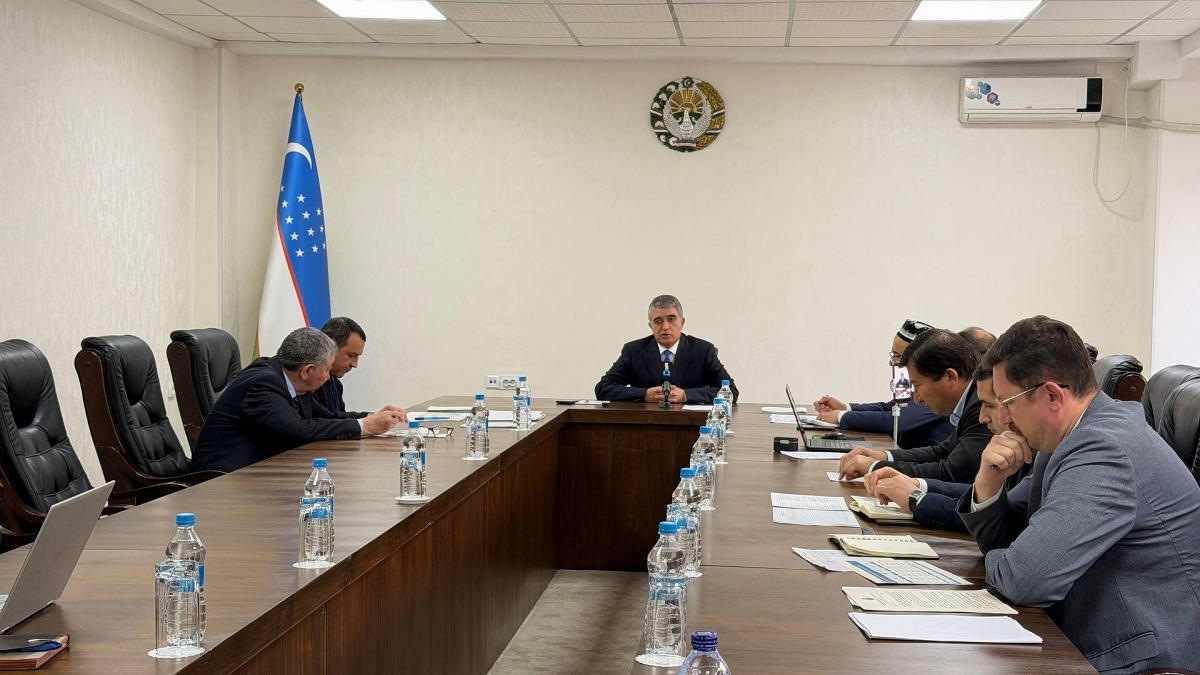
Uzbekistan could face an annual shortage of 15 billion cubic meters of water by 2030, prompting authorities to overhaul the national irrigation system and negotiate Amu Darya River flow sharing with neighboring states. Minister of Water Resources Shavkat Khamraev outlined the current state of the country’s water supply and ongoing talks with Kabul and Dushanbe.
Negotiations with Afghanistan continue to center on the Qosh Tepa Canal currently under construction, which is set to divert part of the transboundary river flow to northern Afghan provinces. According to Khamraev, the two sides hold regular consultations on water management, though specific withdrawal volumes from the Amu Darya have not yet been fixed. Bilateral agreements establishing formal quotas are planned once construction is completed.
Discussions with Tajikistan focus primarily on the Rogun Hydropower Plant. Khamraev estimated that completing the facility will take at least another 4–5 years, while filling its reservoir could extend until roughly 2035. Out of the reservoir’s 13.3 billion cubic meter design capacity, authorities are currently permitted to accumulate 1–1.5 billion cubic meters in stages. Khamraev noted that Tajikistan has not reduced Uzbekistan’s allocation and that the country continues to receive its established Amu Darya limits in full. Beyond the Rogun project, the two nations are coordinating operating regimes for the Nurek Reservoir and monthly water delivery schedules for downstream districts.
Uzbekistan’s domestic water balance has tightened considerably over recent decades amid population and economic growth in an arid climate. Prior to independence, the country received an average of 64 billion cubic meters of water annually, whereas total inflow has now declined to 51–52 billion cubic meters per year. Over the same period, the population has doubled, while industrial output and irrigated agriculture – which accounts for the majority of river water consumption – have expanded significantly.
To close the projected 15 billion cubic meter gap by the end of the decade, the government is prioritizing the reduction of conveyance losses between water sources and farmland. Much of the aging irrigation network consists of unlined earthen channels, where water seeps into the soil and evaporates before reaching crops. Through canal concreting, pumping station upgrades, and digital metering, authorities aim to achieve annual savings of 15 billion cubic meters. Between January–October 2026, water savings reached approximately 10.7 billion cubic meters, with total savings projected to hit 11 billion cubic meters by the end of the year.
State funding supported the pace of infrastructure modernization in 2026, financing the concrete lining of 1,000 kilometers of channels and bringing the total length of lined main and inter-farm canals to 12,700 kilometers. Along these upgraded sections, water losses dropped to 35%, while delivery speeds to agricultural land increased 2–3 times. According to ministry assessments, water use efficiency across several irrigation systems rose from 50–60% to 90–95%.
Canal reconstruction is accompanied by a broad shift toward drip irrigation and other water-saving agricultural practices. While water-efficient technologies covered only 28,000 hectares in 2017, adoption reached 2.8 million hectares by November 2026 – representing 65% of all irrigated farmland in Uzbekistan. In parallel, authorities are automating flow monitoring, with “Smart Water Control” metering devices installed at 13,300 water management facilities and 106 major sites now fully automated.