
Sediments and old equipment: how the Uch-Kurgan HPP is being updated
Kyrgyzstan continues to implement a large-scale project to modernize the Uch-Kurgan HPP– the first station of the Naryn cascade, commissioned back in 1962. The environmental monitoring report for the first half of 2025, prepared by the Project Implementation Department of Electric Stations OJSC for the Asian Development Bank (ADB), reveals the details of environmental support for the work. Special attention in the document is paid to the issues of bottom sediment management, hazardous waste management and the results of laboratory studies in the zone of influence of the hydroelectric power station.
The key aspect affecting the environmental safety of the project remains the work on cleaning the reservoir from sediments. According to the original plan, it was supposed to excavate the soil to a depth of up to 30 meters. However, during the implementation of the project, technical and budgetary constraints arose related to the transportation of sediments. Preliminary calculations have shown that the cost of laying a 2.5-kilometer pipeline for pumping pulp to a temporary warehouse will be almost half the cost of the dredger itself. In addition, such a route would require the intersection of roads and railways, which would entail additional risks and costs.
In this regard, it was decided to change the approach to cleaning the bottom. As part of the updated environmental assessment, new sites for storage and drying of sediments were identified in the immediate vicinity of the reservoir – at a distance of 250-300 meters from the HPP. This made it possible to abandon the construction of a long pipeline and an additional pumping station. However, the depth of dredging was limited to ten meters. The ecological justification of such a decision is based on the availability of actual chemical analyses of the soil composition only for the upper layers of silt. Data on the composition of deeper layers, obtained back in 1989-1990, require verification, therefore, work at a depth of more than 10 meters is not carried out at this stage in order to avoid unpredictable effects on the ecosystem of the Naryn River.
During the reporting period, the facility also monitored the handling of industrial waste. The contractor, a consortium of CNEEC and Dongfang companies, organized a temporary accumulation of waste at the station. Special attention is paid to hazardous waste: a lockable metal container is provided for their storage, which will be installed on a paved and fenced site under round-the-clock security. The report notes that during the inspections, specialists were given recommendations on improving garbage sorting practices. Household waste is removed by specialized organizations, and wastewater from the shift settlement is discharged into the centralized sewage system of the municipality of Shamaldy-Sai.
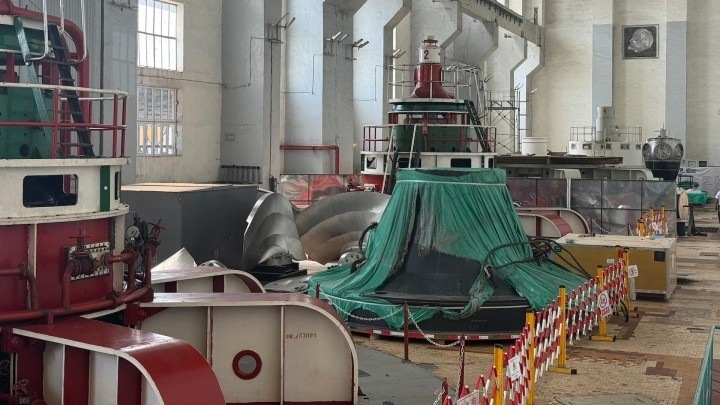
Instrumental monitoring of the state of the environment conducted by an accredited laboratory in the spring of 2025 included sampling of atmospheric air, surface waters of the Naryn River (above and below the dam), soil and bottom sediments. The results of the analyses showed that the concentrations of pollutants do not exceed the maximum permissible standards. Noise and vibration levels were also measured near the engine room, where work is underway to replace the hydraulic unit No. 3. There were no excess of normative indicators that could adversely affect the health of personnel or the local population.
Despite the active phase of construction and installation work, not a single serious environmental accident or incident was registered in the first half of 2025. There were also no complaints from the local population regarding the implementation of the project. Nevertheless, ADB and Electric Stations experts continue to regularly audit the site, monitoring compliance with environmental and safety management plans. Further implementation of the project, including the purchase of equipment for dredging, will be carried out under strict control to minimize the risks of secondary pollution of the transboundary river’s water resources.
Gulnara Ibragimova (Hydropost)
Original (in Russian): Донные отложения и старое оборудование: как обновляют Уч-Курганскую ГЭС