
The expert assessed the risks of a catastrophic breakthrough of Lake Sarez
The potential breakthrough of Lake Sarez in Tajikistan can lead to catastrophic consequences on a regional scale. This assessment was made by the head of the Republican Center for the Study of Climate Change and the Ozone Layer, Sattor Saidov. In an interview with Sputnik Tajikistan, the expert explained in detail what threats a high-altitude reservoir carries and what factors can trigger a natural disaster. According to the expert, the theoretical destruction of the natural dam will affect not only the territory of Tajikistan, but will also have a devastating impact on the states located downstream of the rivers.
According to the described scenario, in the event of a breakthrough, a giant wave will rush down the Bartang riverbed, move to Panj and further to Amu Darya. Such a flow is capable of causing catastrophic damage to the valleys of Tajikistan, as well as affecting the border areas of Afghanistan. Further down the chain, Uzbekistan and Turkmenistan may feel the consequences. The scientist emphasizes that the scale of destruction in the event of a negative forecast will be enormous for the entire water system of the region.
Damage to the Usoy dam, which holds millions of cubic meters of water, can occur under the influence of a number of natural causes. Saidov named strong earthquakes, large landslides, deep soil erosion, as well as complex processes of interaction between glacial and mountain landscapes as key risk factors. Although the scenario of a complete and instantaneous breakthrough is considered unlikely by experts, it is still theoretically possible, which automatically puts the object in the category of the highest risk. In this regard, continuous monitoring of the state of the lake remains a primary task.
The expert paid special attention to climate change, which makes its own adjustments to the safety of the facility. Natural phenomena, such as intense downpours or active melting of snow and ice, can provoke the descent of new mudflows or landslides in the lake basin. These processes create an additional load on the natural dam. Saidov noted that the influence of the environment increases the chances of uncontrolled release of water, as climate change increases the likelihood of trigger events that can lead to a dangerous transformation of the state of the reservoir.
Lake Sarez has been one of the main problems for Central Asian countries for more than a century. It was formed in 1911 as a result of a devastating earthquake, when the collapsed rock blocked the channel of the Bartang River, creating the Usoysky blockage. Because of the combination of picturesqueness and potential threat, the reservoir is often called “Sleeping Beauty” or “Sleeping Dragon”. The area of the lake is characterized by high seismic activity, which requires special attention from specialized services.
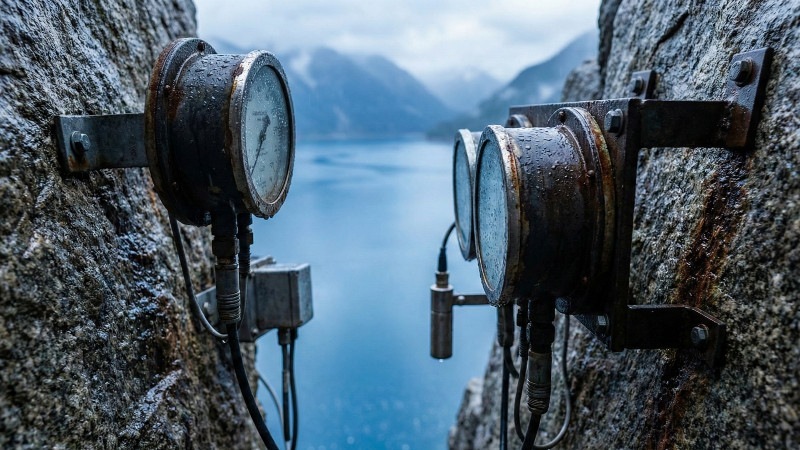
During the Soviet period, options for engineering intervention to reduce risks were considered, including the issue of building a hydroelectric power station at the Usoysky blockage. However, due to the extreme complexity of the project and the inaccessibility of the terrain, it was not possible to build a Dam. Currently, the Sarez Lake is being monitored around the clock. Employees of the Emergency Situations Committee monitor the readings of special sensors in real time in order to record any, even minimal changes in the condition of the reservoir and dam.
Original (in Russian): Эксперт оценил риски катастрофического прорыва Сарезского озера