
Uzbekistan and Afghanistan Advance Water Cooperation on Qosh Tepa Canal
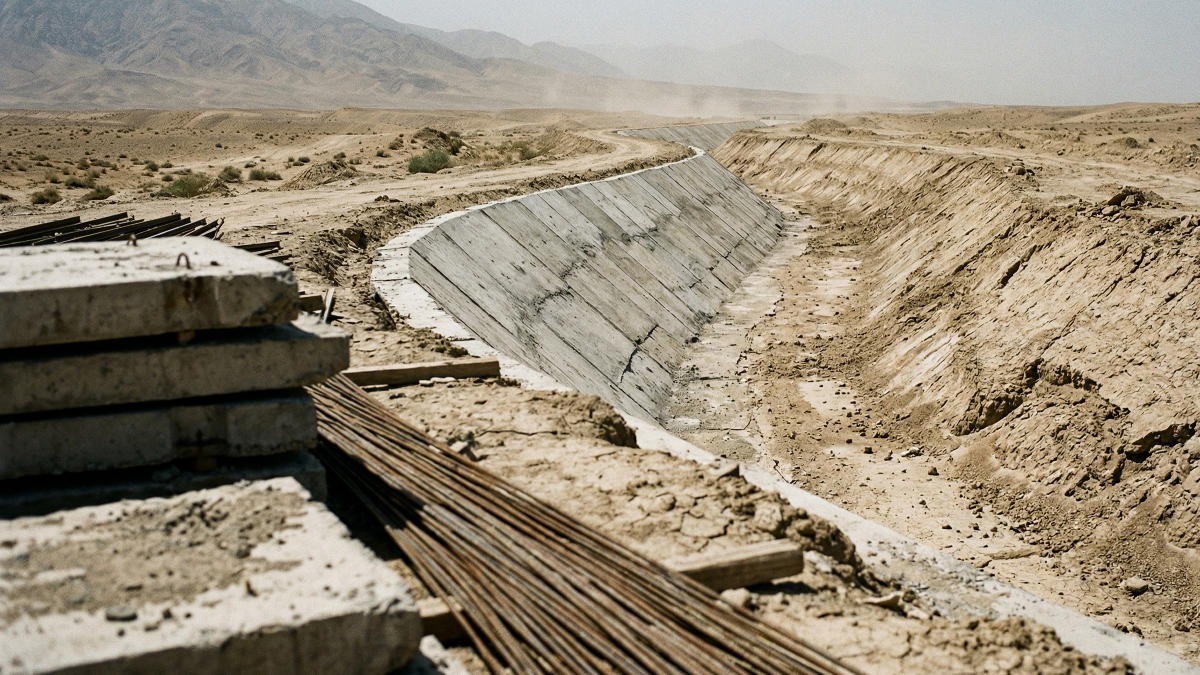
TASHKENT (Rivers without Boundaries) – Uzbekistan views the construction of the Qosh Tepa canal in Afghanistan not as a hostile act but as an opportunity for practical cooperation in the water sector. Tashkent has offered Kabul technical assistance in the proper design and concreting of the new canal bed. This engineering support is intended to help the neighboring country meet its domestic water requirements while preventing substantial losses of Amu Darya water resources through soil filtration – a problem that would ultimately negatively impact all downstream nations.
The primary focus of bilateral negotiations involves the projected volume of water withdrawal from the Amu Darya basin – the key water artery of the region – rather than the construction of the canal itself. An annual withdrawal by Afghanistan of up to two billion cubic meters is considered an acceptable level that will not negatively affect the Uzbek economy. However, an increase in water withdrawal to four billion cubic meters presents severe risks of irrigation water shortages for agriculture in Uzbekistan. Exact water withdrawal quotas must be definitively established at the current stage of the project.
Implementation of the Afghan hydro-technical project, initially scheduled for completion in 2028, is currently suspended due to significant infrastructure limitations. Once the canal bed construction is finished, delivering water to agricultural fields will require the uninterrupted operation of pumping stations. This requirement depends entirely on resolving the acute electricity deficit in Afghanistan, where current power generation is insufficient even for basic domestic lighting.
Following four official working visits by the Uzbek government delegation to Kabul, Afghan authorities have demonstrated a readiness to compromise. The administration in Kabul acknowledges the importance of continuous energy support from Tashkent and has formally requested assistance in concreting the canal bed. As part of this technical cooperation, Uzbek engineers are sharing their expertise in developing irrigation systems, and specialized educational institutions in Uzbekistan have begun training Afghan hydro-engineering students.
The issue of water loss during transportation affects all of Central Asia. Uzbekistan itself lost between a third and half of its irrigation water for decades due to the deterioration of unlined earth canals. A large-scale modernization campaign is now underway across the republic to concrete irrigation networks and replace open trays with closed plastic pipes. The upgrade of outdated pumping stations alone has already saved the state budget approximately two trillion soums – funds that are now being reinvested into further infrastructure renewal.