
Tajikistan Prepares for 2026 Water Summit Amid Local Infrastructure Gaps
In May 2026, Dushanbe will host the fourth International Conference on Water Resources, expecting the arrival of 2,500 delegates. Tajikistan has long established itself as a global initiator of discussions on water resource management. However, the abundance of international forums raises legitimate questions regarding their practical yield. Discussions concerning access to water have been taking place at the international level for decades. As early as 1977, at the UN conference in Mar del Plata, Argentina, delegates established the right of all peoples to access drinking water regardless of their level of economic development. Nearly half a century later, resolutions from specialized events, including the recent forum in Dushanbe, continue to reiterate the same points regarding adequate sanitation and the right to safe water. The specifics of water problems vary greatly depending on the region – the challenges faced in Africa share little in common with the situation in Central Asia.
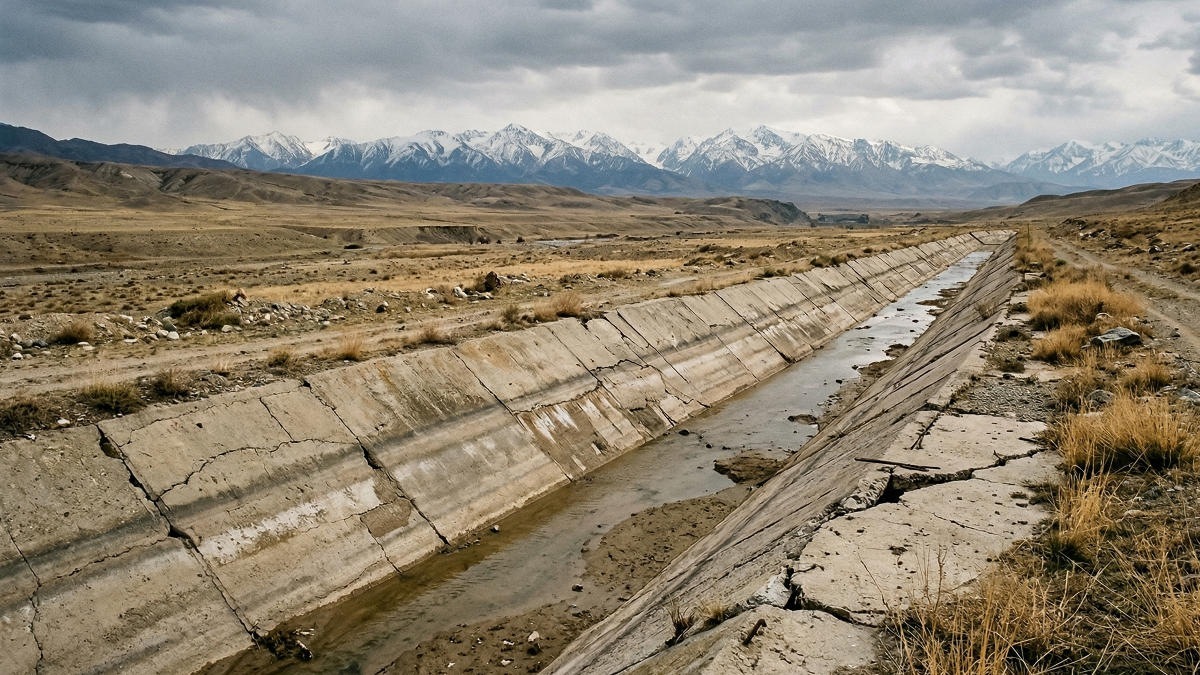
Within Tajikistan, domestic rhetoric concerning global warming, melting glaciers, and water scarcity has intensified in recent years. Some of these assertions contradict the basic laws of hydrology. Statements about the rapid reduction of ice cover do not align with complaints about moisture shortages, as the active melting of ice temporarily increases the water volume in rivers. The focus of water management requires a shift toward identifying leaks and losses within existing irrigation networks.
Historical context demonstrates a starkly different model for operating the water management complex. In the second half of the twentieth century, the relevant state ministry managed a budget second only to the military. These funds were utilized in Tajikistan to construct the Dangara and Baipaza irrigation tunnels through mountain ranges, totaling 21 kilometers in length. Water from the Vakhsh River reached the Yavan, Obi-Kiik, and Dangara valleys, irrigating vast territories in the Khatlon and Sughd regions. The sheer scale of construction allowed the republic to dispatch equipment and specialists to build land reclamation systems in the Volga region.
The economy of that era demanded high cotton production, with harvests reaching up to one million tons. Today, the agricultural sector is fragmented into 200,000 small dehkan farms that harvest up to a third of previous volumes. The modern economy relies heavily on foreign investment and remittances from labor migrants. New small and medium-sized enterprises are opened primarily using private capital, although the participation of state structures in opening ceremonies creates the impression of government funding. Publishing lists of specific facilities receiving declared investments would make this process significantly more transparent.
Currently, the country is actively building roads, bridges, and power plants, yet successes in constructing hydraulic engineering structures and commissioning new irrigated lands remain modest. The primary focus has shifted toward international diplomacy. Over the past two decades, the UN General Assembly has adopted several resolutions initiated by Tajikistan, declaring various international water decades and years of cooperation. The transition from the Water for Life decade to the Water for Sustainable Development decade is described by officials as integration into the global agenda. In practical terms, this signifies the prolongation of discussions for another ten years.
Paper initiatives cannot replace pumping stations and canals. The republic is establishing new structures, such as the National Water Council, whose practical necessity remains unclear – coordination functions could easily be absorbed by the relevant ministry or the government itself. Similar advisory bodies, such as the equivalent council in the United Kingdom, were abolished as unnecessary as early as the 1980s.
Meanwhile, tangible infrastructure projects remain idle on the ground. A definitive decision regarding the fate of the Lower Kofarnihon reservoir has yet to be made. Completing this long-delayed project, which includes a hydroelectric power station, would provide water for hundreds of thousands of hectares of land, partially alleviate unemployment in three districts of Tajikistan, and establish water supplies to the neighboring Surkhandarya region of Uzbekistan. While these practical challenges remain unaddressed, resources continue to be channeled into preparations for the next global forum.