
Central Asia Modernizes Syr Darya Water Infrastructure Amid Climate Pressures
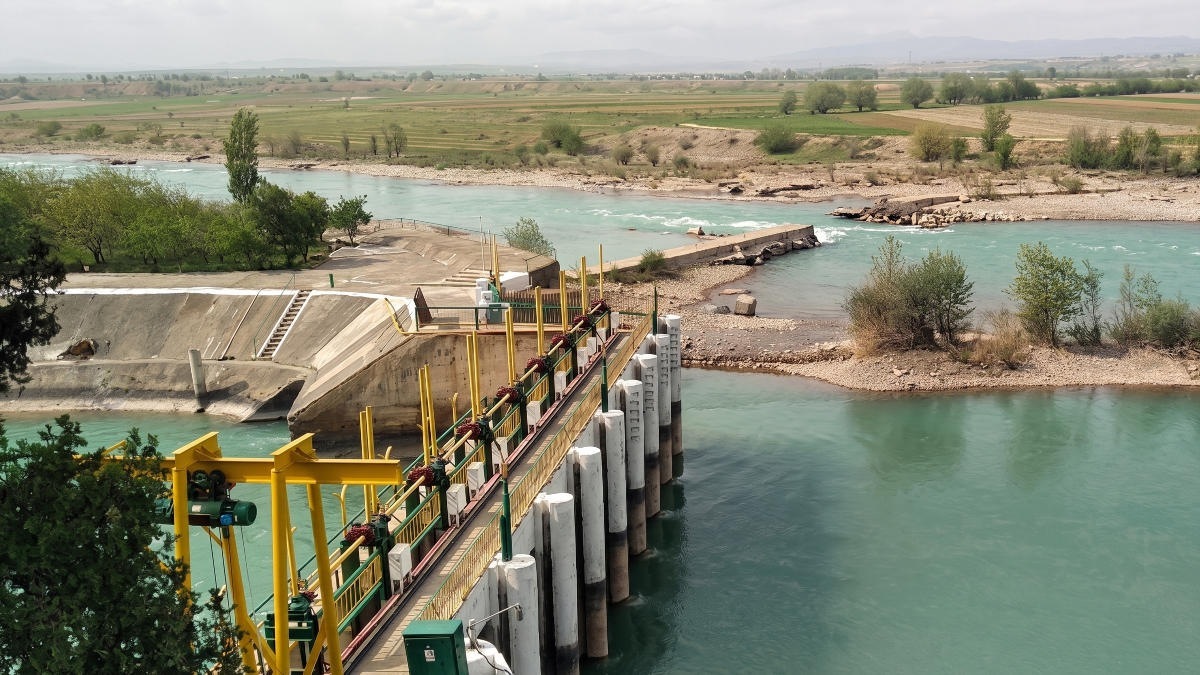
Central Asian countries are undertaking a large-scale modernization of hydraulic infrastructure in the Syr Darya river basin. Against the backdrop of melting glaciers and prolonged droughts, nations in the region are implementing automated flow management systems and reconstructing facilities built in the mid-twentieth century. A transboundary expedition by experts from the Scientific Information Center of the Interstate Commission for Water Coordination evaluated the condition of hydroelectric complexes and main canals across Tajikistan and Uzbekistan.
The shift in the operational regime of regional reservoirs from irrigation to energy generation complicates the distribution of water resources among Central Asian countries. A clear example is the Kayrakkum Hydroelectric Power Plant in Tajikistan. The Bahri Tojik reservoir can accumulate 3.4 cubic kilometers of water, but during the winter period, priority is given to electricity generation, causing the dam gates to remain open. Recent engineering surveys disproved forecasts of imminent bottom siltation, as the primary volume of suspended matter settles upstream in the Toktogul reservoir in Kyrgyzstan. This allowed an international consortium to reconstruct the hydroelectric power plant without altering the reservoir parameters. Through modern technologies, the capacity of six units increased from 126 to 174 megawatts without requiring additional water consumption.
Resource deficits are forcing engineers to alter local approaches to flow distribution. A prolonged water shortage is observed in the Tashkent region of Uzbekistan, where the Chirchiq river below the Upper Chirchiq hydroelectric complex is drying up as the flow is diverted into diversion canals to save winter crops. The complex itself, constructed in 1958, was structurally designed to pass floods of up to 1600 cubic meters per second, but today the average volume has fallen significantly. Water is distributed through the Zakh, Khanym, and Bozsu networks, meeting the needs of Uzbek and Kazakh farms as well as supplying drinking water to Tashkent. The management of this process has been transitioned to dispatch control using electronic SCADA systems, which regulate water levels and pressure in real time.
A radical reduction in water transportation losses is achieved through continuous concrete lining of riverbeds and the installation of polymer screens. On the main networks of the Buka district, losses previously amounted to a quarter of the total pumped volume due to soil filtration. The transition to concrete-lined canals has reduced this figure to two to four percent, leaving only natural evaporation. On smaller irrigation branches, the application of bentomats – a rolled geosynthetic material based on bentonite clay – is being tested. Upon contact with water, the granules form a dense waterproofing layer. Concurrently, the agricultural sector is shifting toward drip and sprinkler irrigation, replacing resource-intensive ditch watering systems.
In the Fergana Valley, water balance management encompasses a network of thousands of engineering structures originating from the Andijan reservoir and the Uch-Kurgan Hydroelectric Power Plant. The 116-meter Andijan concrete dam holds 1.9 cubic kilometers of water. Inflow forecasts for upcoming vegetation periods are recorded at 80 percent of the norm, which necessitates strict consumption limits. A system of automated hydrological stations that transmit telemetry data online is being deployed along the main waterways.
Ultrasonic sensors have been installed on the Great Fergana Canal, which crosses the territories of Uzbekistan, Tajikistan, and Kyrgyzstan. Precise instrumental metering eliminates disagreements between the countries when calculating transferred and received volumes. At the Uch-Kurgan Hydroelectric Power Plant, the modernization of coastal structures and water outlets continues, with completion scheduled for 2026. The transition of outdated infrastructure to comprehensive digital control is viewed by relevant departments as the only viable method to preserve the stability of the agriculture and energy sectors in the region amid global climate change.