
Sangtuda-1 HPP Reports Production Increase Amid Persistent Financial Challenges
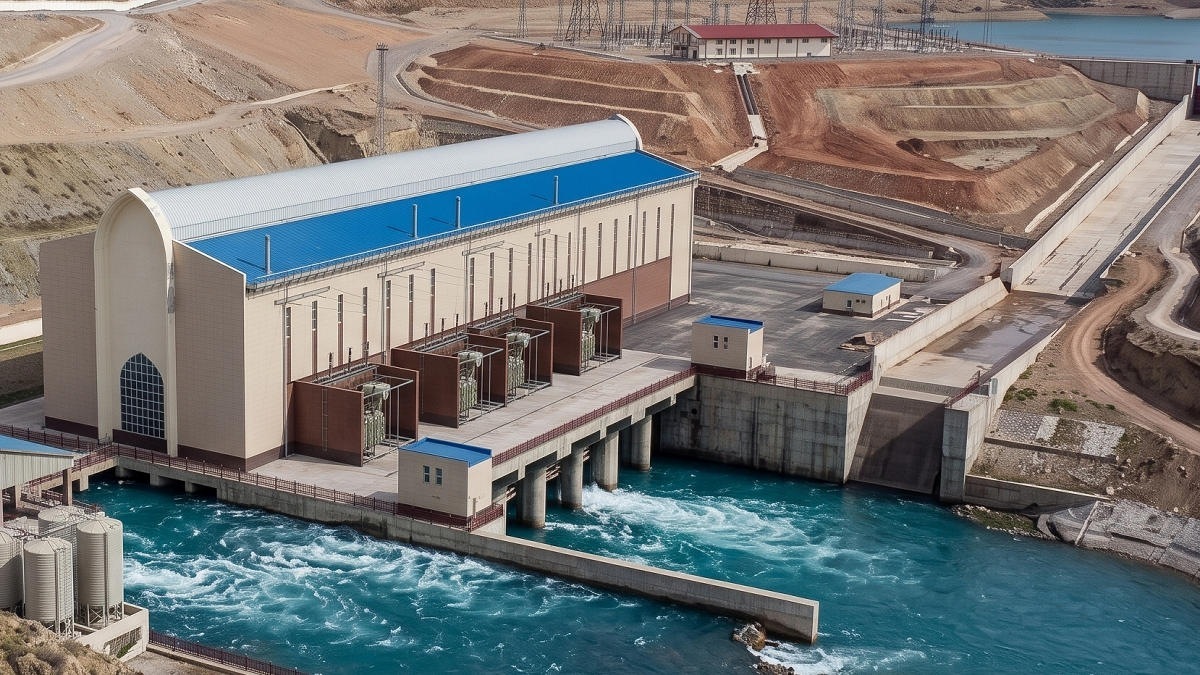
Sangtuda-1 HPP, Tajikistan’s second-largest hydroelectric station, supplied more than 1.4 billion kWh of electricity to the national grid during the first half of 2026. According to company data, this represents an increase of 5.11 million kWh, or 0.35%, compared to the same period last year. The capacity utilization factor, which measures the ratio of actual output to theoretical maximum, reached 51%, up from 50.9% a year earlier. The facility fully implemented its production program and scheduled maintenance for the January–June period. In April, the station underwent an audit by the international certification body DQS, confirming the compliance of its environmental management system with the ISO 14001:2015 standard.
Financial disclosures indicate that the national energy holding Barki Tojik owed the station 3.2 billion somoni at the end of June 2026. While Sangtuda-1 management states that current supply obligations are being met in full and on schedule, the combination of stable generation and a stagnant multi-year debt remains a defining feature of the asset. This issue has persisted for fifteen years as one of the most sensitive topics in economic relations between Moscow and Dushanbe.
The debt has accumulated over a significant period. As of December 31, 2024, it stood at 3.257 billion somoni, or approximately 297–298 million dollars at the exchange rate of the National Bank of Tajikistan. Since the station’s commissioning, the average payment rate has hovered around 59%, though it dropped to 32–34% during parts of 2024 and early 2025. Even with partial payments, the arrears continued to grow, previously causing the station to face its own tax and financial constraints.
A resolution was established at the intergovernmental level rather than through market mechanisms. In April 2025, the relevant ministries of Russia and Tajikistan signed a protocol amending the 2009 agreement on the station’s operation, a document later ratified by the Tajik parliament. It provides for a phased write-off of the debt accumulated by the end of 2024, with 25 million dollars to be cleared annually every February 15 from 2026 to 2033, and a final balance of approximately 97.9 million dollars scheduled for February 15, 2034. The write-off is contingent upon the buyer paying for current supplies in full and on time, and the station being granted primary land-use rights for the hydroelectric site and surrounding territory.
Pricing structures were also revised. The tariff for Barki Tojik was reduced from approximately 3.17 cents per kilowatt-hour to 1.5 cents in 2025, with a gradual increase to 2.2 cents by 2032, after which it will be fixed at 3.3 cents. The investment payback period was extended from approximately 20 to 35 years, pushing the target to 2048. This acknowledges the failure of the previous financial model; reporting from the mid-2010s showed that only 10% of invested funds were returned during the first half of the original 20-year term. Total capital for the project is estimated at 847 million dollars, with the Russian side, operating through entities linked to Inter RAO, holding 75% minus one share, and Tajikistan holding 25% plus one share.
Beyond financial figures, the facility faces chronic underutilization. With an installed capacity of 670 MW, second only to the Nurek HPP, its design annual output is estimated at 2.7 billion kWh. However, the actual capacity utilization factor has remained within the 45–51% range for years. Barki Tojik routinely procures significantly less than the contracted volumes, taking approximately 2 billion kWh annually against a contract for 2.7 billion. This discrepancy is attributed to internal network limitations, the isolation of Tajikistan’s power system following Uzbekistan’s exit from the Central Asian Unified Power System, and limited export capacity, primarily to Afghanistan.
These constraints result in significant idle spills. During the summer, when water levels in the Vakhsh River are high but domestic demand is low, large volumes bypass the turbines, leading to an irrevocable loss of potential generation. In contrast, the country faces traditional winter consumption restrictions, yet the station still does not operate at full capacity because the buyer is unable to purchase the full volume at the agreed price. While Sangtuda-1 accounts for 11–12% of Tajikistan’s total generation and serves as a vital tool for mitigating winter energy deficits, its power remains relatively expensive for the national holding. Low domestic tariffs, network losses, and consumer non-payment create a cycle where Barki Tojik cannot afford to increase its intake.
While the 2025 agreements were publicly hailed as a breakthrough to stabilize the Tajik energy holding while guaranteeing returns for Russian investors, the debt remained at 3.2 billion somoni in mid-2026. This leaves unresolved questions about the status of the first write-off scheduled for February 2026 and the fulfillment of accompanying conditions, such as the formalization of land-use rights. Neither the company nor the ministries have commented publicly on the debt status since that deadline.
Similar difficulties observed at the Iranian-built Sangtuda-2 HPP suggest that these issues are systemic. The experience of Sangtuda-1 highlights that the viability of major joint infrastructure projects in Central Asia is determined less by technical equipment and more by tariff policy, network constraints, seasonal generation cycles, and payment discipline within the recipient power system. The technically sound production figures of the first half of the year represent only one variable in this broader economic framework.