
Afghanistan’s Qosh Tepa Canal Project Reshapes Regional Water Management
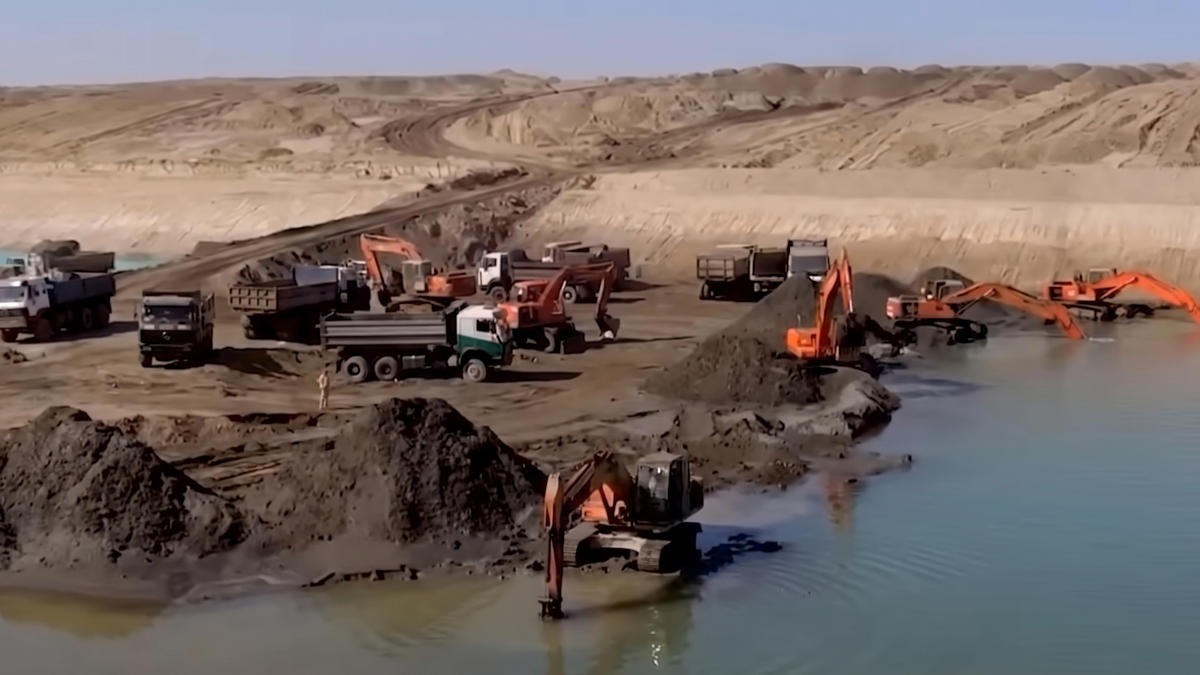
Construction of the Qosh Tepa canal in northern Afghanistan is reshaping the water map of the region. While projections of potential resource deficits and regional conflicts circulate, technical assessments of the project’s parameters offer a more measured perspective. The new waterway will stretch nearly 300 kilometers to irrigate arid territories – however, the primary environmental challenges in Central Asia involve both the new Afghan infrastructure and the existing internal systems of downstream nations.
The hydraulic structure is designed to divert water from the Amu Darya, a major transboundary river. At the intake point, the canal is 125 meters wide and eight meters deep, with the main channel extending 290 kilometers. The project aims to develop 550,000 hectares of new agricultural land, necessitating more than 500 kilometers of additional distribution networks. Total construction costs are estimated between $680 million – $2 billion.
Although the facility is often associated with the current administration in Kabul, its technical foundation was established over several decades. Initial designs were drafted in the 1970s under President Mohammed Daoud Khan. In 2018, the government of Ashraf Ghani revisited the project, signing a contract for a feasibility study with a U.S. engineering firm. By August 2021, the project was fully prepared for implementation, leaving the succeeding administration to secure necessary financing.
The Amu Darya is the most voluminous river in Central Asia, with an annual flow of approximately 75 cubic kilometers – a volume comparable to that of the Nile. Approximately one–third of this flow, or 21–23 cubic kilometers, originates within Afghanistan. Estimates indicate that the Qosh Tepa canal will divert between six – ten cubic kilometers of water annually. At full capacity, the Afghan side will utilize approximately 12 percent of the river’s total flow, contrasting with regional rumors suggesting a diversion of one–third of the water.
The legal framework for water distribution relies on historical documents and a lack of modern regional consensus. Former Afghan Minister for Disaster Management Najib Agha Fahim cites a 1958 agreement with the Soviet Union, which recognized the Amu Darya as a shared border and established equal rights to its resources. Following the dissolution of the USSR, the newly independent republics signed the 1992 Almaty Agreement, maintaining Soviet–era usage limits: Uzbekistan at 48.2 percent, Turkmenistan at 35.8 percent, Tajikistan at 15.4 percent, and Kyrgyzstan at 0.6 percent. Kabul was not a participant in this agreement.
Officials in Tashkent have avoided confrontational rhetoric. Uzbekistan’s Minister of Water Resources, Shavkat Khamraev, has publicly acknowledged Afghanistan’s right to utilize a portion of the river’s flow. Uzbek diplomacy has focused on negotiation and the maintenance of neighborly ties. In the spring of 2025, the nations formalized these intentions by signing a treaty on the joint management of the Amu Darya basin.
The central challenge for the region is not only the emergence of a new consumer but also the substantial internal water losses within the Central Asian republics. The total flow of the Amu Darya has decreased by 12 percent over the past 30 years. Water is distributed through main canals exceeding 2,500 kilometers and irrigation networks totaling over 220,000 kilometers. In downstream regions – including Uzbekistan’s Khorezm and Karakalpakstan, and Turkmenistan’s Dashoguz – only half of the diverted water reaches agricultural fields. The remainder is lost to evaporation or seepage through unlined earthen channels.
Turkmenistan’s Karakum Canal serves as a prominent example of inefficient infrastructure. Constructed in 1967, it extends more than 1,300 kilometers through the desert. While drawing 12 cubic kilometers from the Amu Darya annually, the canal loses half of that volume. Currently, only 20 percent of Turkmen and 30 percent of Uzbek irrigation arteries are lined with concrete. Although South Korean investors have expressed interest in the reconstruction of the Karakum Canal, the specific timeline for modernization remains unconfirmed.
To adapt to the growing water deficit, Uzbekistan is restructuring its agricultural sector. The government has introduced a cluster system and provided subsidies for water–saving technologies. Drip irrigation has been implemented on 2.5 million hectares, covering 60 percent of cultivated land and resulting in the conservation of approximately two cubic kilometers of water. However, research analysts suggest that technological advances are limited by rigid state planning, such as mandatory cotton quotas, which restricts the economic flexibility of farmers and their motivation to invest in environmental improvements.
Despite Kabul’s objectives, the Qosh Tepa project faces significant engineering risks. In late 2023, satellite imagery released by the environmental coalition Rivers without Boundaries documented a major failure at a construction site, where water breached an embankment and flooded approximately 30 square kilometers. The incident indicates that building a canal in unstable desert terrain presents substantial engineering challenges, and the long–term ecological impact on the Aral Sea basin will remain unclear as work continues.