
Kazakhstan Expands Turkestan Water Infrastructure Amid Environmental Disputes
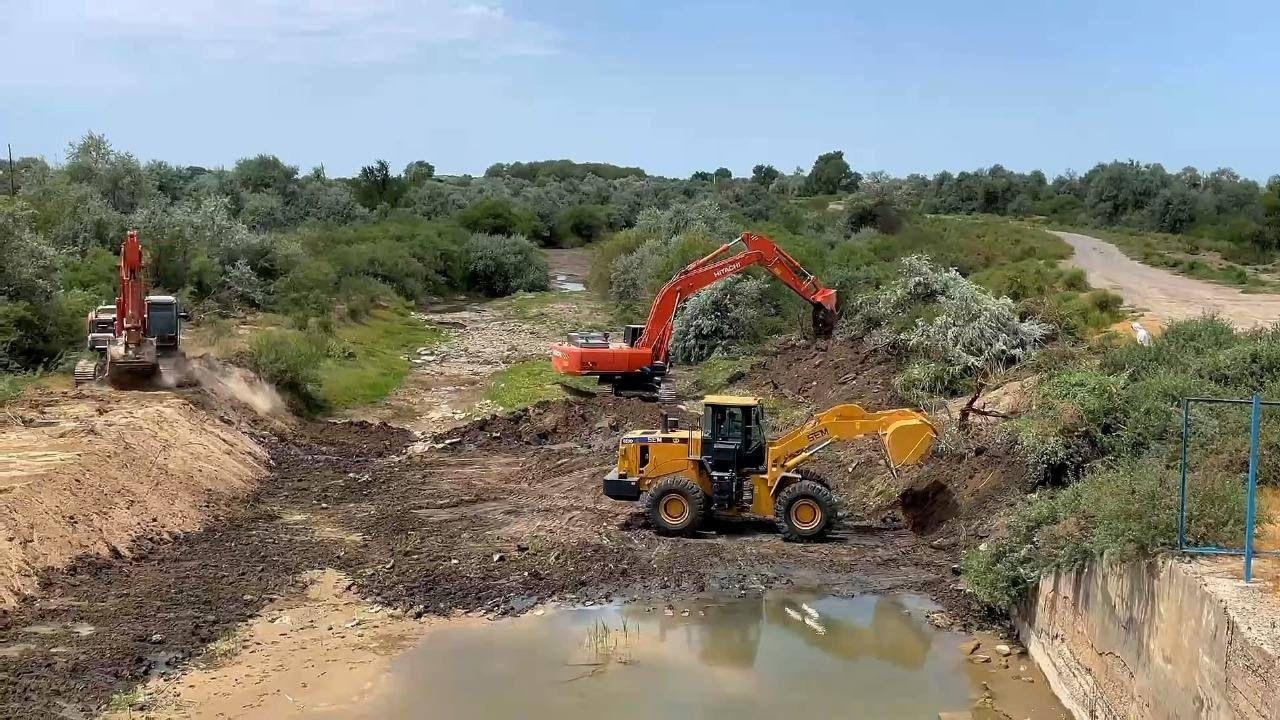
The Committee for Water Resources under the Kazakh Ministry of Water Resources and Irrigation is currently developing the second construction phase for the reconstruction of a main water pipeline intended to supplement the Saryagash group water supply in the Turkestan region. This phase involves the construction of headworks and a water treatment plant utilizing membrane filtration technology. The project documentation is under review by the state expertise body. Once operational, the system will provide high–quality drinking water to 66 settlements in the Saryagash and Keles districts, serving a population of approximately 250,000 people. Neither the capacity of the proposed station nor the estimated flow rate of the pipeline has been specified in official documentation.
The transport component of the infrastructure is already complete. The first construction phase concluded in late 2025, resulting in the installation of 35.5 kilometers of a 630–millimeter diameter main pipeline and 210 water wells. Arsen Zhakanbaev, Chairman of the Water Resources Committee, confirmed that the facility’s acceptance certificate was signed in December 2025. The upcoming water treatment plant is designed specifically to ensure water quality rather than volume. Membrane technology is employed to filter out suspended solids, organic matter, and microbiological contaminants, which is a critical requirement for water sourced from open channels. The system draws from the R–1 irrigation canal, which originates in Uzbekistan. Official descriptions characterize the supply as soft mountain water, as it originates in the Western Tien–Shan but is collected in the plains and delivered via a canal system constructed decades ago.
The project aims to resolve long–standing issues of water scarcity and poor quality in these border districts, where many settlements currently rely on intermittent schedules, private wells, or surface sources. Funding for these works has been allocated from the Special State Fund, which manages assets returned to the state. Concurrently, the same districts are central to a separate infrastructure proposal involving a different strategic approach. In 2021, a subsidiary of South Oil Company announced plans for a cascade of two to five hydroelectric power plants on the Ugam River within the Sairam–Ugam State National Nature Park, paired with a 210–kilometer pipeline. This initiative is a revival of a 1970s Soviet–era plan designed to provide drinking water to one million residents across the Kazyguurt, Saryagash, Keles, Zhetysay, and Maktaaral districts while alleviating regional power deficits.
Technical parameters for the hydroelectric project include an estimated capacity of 72–165 megawatts, a 30 million cubic meter reservoir, and a planned water intake of 3.5 cubic meters per second. This flow rate would yield approximately 110 million cubic meters of water annually. On a per capita basis for one million residents, this provides roughly 300 liters per day – a figure that is double the standard consumption rate for settlements with centralized water systems. The developer, Ocean Energy Company, is owned by Shymkent entrepreneur Serikzhan Seitjanov and his family, whose assets include Ontustik Corporation and South Oil Exploration Company. An EPC contract was signed with Power China in May 2023, though cost estimates for the project vary significantly, ranging from 550 million dollars in 2021 to 1.3 billion dollars. A funding application was under consideration by the Development Bank of Kazakhstan as of March 2025.
State participation has been formalized through several stages. In June 2024, the government authorized direct negotiations for a public–private partnership with the developer. In January 2025, the Investment Attraction Council approved the project with a total investment of approximately 190 billion tenge, confirming the dual objectives of water supply and energy production. An analysis by the Rivers without Boundaries coalition suggests that state support for the water component serves as the primary economic driver for the private hydroelectric venture. The coalition notes that the unit cost per kilowatt of installed capacity – estimated between 5,000 and 9,400 dollars – is substantially higher than the 2023 global average of 2,800 dollars. The water infrastructure component is also assessed as expensive relative to the volumes provided.
Land use for the project has also been documented. The Turkestan region administration requested the Ministry of Ecology to adjust the functional zoning of the Sairam–Ugam National Park to allocate 850.9 hectares for hydroelectric facilities. This area includes 70.2 hectares in the strictly protected core zone and 63.2 hectares in the ecological stabilization zone. Although infrastructure development plans for the park were approved in 2022, the park’s management plan published in June 2024 explicitly states that national legislation prohibits altering the hydrological regime or constructing dams and water infrastructure in such protected territories.
The Ugam River flows entirely through the Sairam–Ugam park, which is a component of the Western Tien–Shan transboundary UNESCO World Heritage site, listed in 2016 alongside sites in Kyrgyzstan and Uzbekistan. During a 2024 UNESCO monitoring mission, Kazakh experts proposed correcting 2016 mapping errors by reducing the protected area within the national park from 149,000 hectares to 53,300 hectares. Rivers without Boundaries has identified significant flaws in the impact assessment commissioned by the developers, including the omission of aquatic biodiversity data and the use of irrelevant indicators, such as the argali sheep, which is not found in the Ugam basin. The assessment also lacked an analysis of alternative solutions.
In early 2025, the coalition recommended that the UNESCO World Heritage Committee place the Western Tien–Shan on the List of World Heritage in Danger. Subsequently, the Committee requested that Kazakhstan suspend the Ugam cascade project until a more rigorous impact assessment is completed. In this context, the ongoing reconstruction of the Saryagash pipeline demonstrates that drinking water can be supplied to the region using existing canal systems and treatment facilities without requiring mountain reservoirs or national park land. Official ministry communications regarding the Saryagash pipeline do not mention the Ugam project, presenting the reconstruction as an independent solution for 66 settlements. However, a full comparison of the projects remains difficult as the specific flow rates for the Saryagash pipeline have not been made public.
Several questions regarding regional water management remain unanswered. These include the precise capacity of the Saryagash pipeline and treatment plant during seasonal flow fluctuations in the R–1 canal, and the extent to which existing and new systems meet the calculated needs of the five districts. Furthermore, the basis for the 110 million cubic meter annual target and the associated consumption norms remains unclear. The specific forms of state support approved in January 2025 and the cost distribution between the water pipeline and the hydroelectric cascade have not been detailed, nor has the status of the new impact assessment requested by UNESCO.