
Russia Approves Second Stage of Krasnogorsky Hydrosystem on Irtysh River
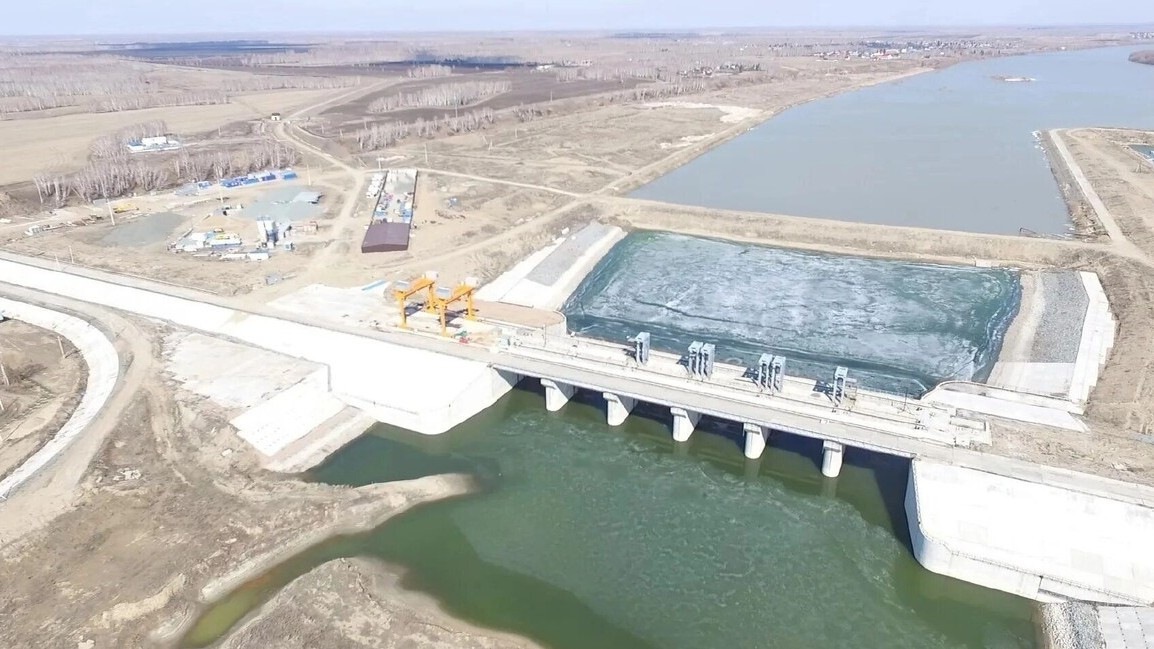
Glavgosexpertiza of Russia has approved the design documentation for the second stage of the Krasnogorsky hydrosystem construction on the Irtysh River in the Omsk region. The project passed the mandatory evaluation for class-three hydraulic structures and received a positive conclusion. This development allows for the continuation of work on the facility, which has been subject to repeated scheduling delays.
The upcoming construction phase will focus on the right-bank section of the river. Engineering plans include the creation of six new structures. The contractor is required to build earth and concrete dams, a navigation lock, a specialized fish migration facility, and extensive bank reinforcement. The project also involves the installation of a comprehensive engineering utilities complex and auxiliary infrastructure, including worker facilities.
The Krasnogorsky hydrosystem, named after the nearby village of Krasnaya Gorka, began construction in 2011. The facility was designed to stabilize water levels in the Irtysh River, secure the urban water supply, and support navigation. The initial plan scheduled the complex for completion in 2016, but work was suspended in 2014 due to funding constraints.
Construction resumed in 2022 when the Moscow-based firm Mezhregionstroy was awarded a 4.6 billion ruble contract. The agreement aimed for the delivery of the primary complex by 2025. However, one year before the target date, the technical readiness of the facility was recorded at approximately 20 percent.
The project’s progress was hindered by internal labor issues within the contracting firm. In the autumn of 2025, workers reported systematic delays in wage payments. The situation at the site prompted an intervention by the prosecutor’s office, which organized on-site supervisory inspections.
In September 2026, the Russian Minister of Natural Resources and the Environment, Alexander Kozlov, and the Governor of the Omsk region inspected the site. Following an assessment of the current progress, authorities established a new planning horizon – the hydrosystem is now expected to become operational by 2030.