
Northern Eurasia Rivers Under Threat Despite Global 30×30 Target
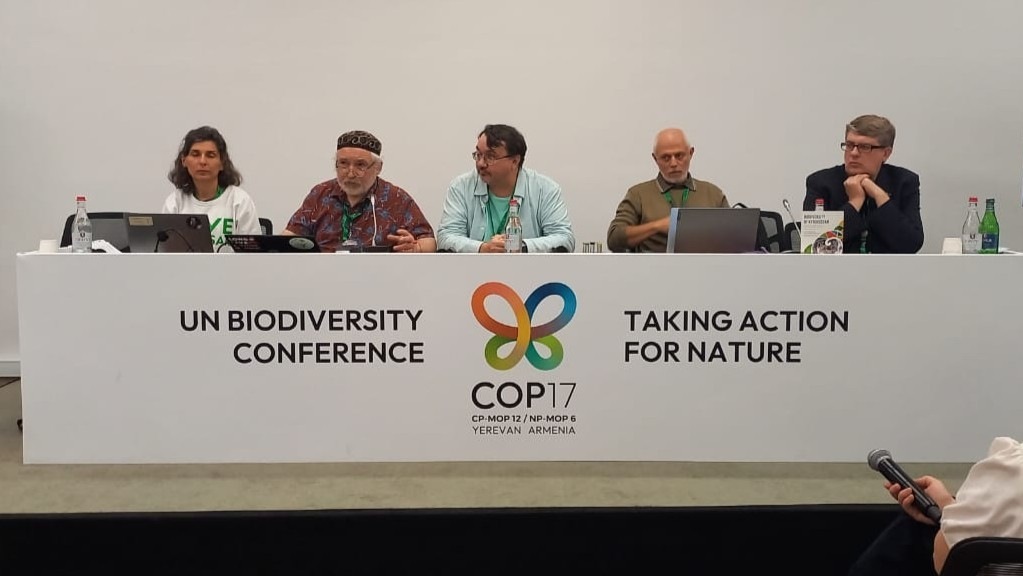
The 17th Conference of the Parties to the Convention on Biological Diversity (CBD COP17) in Yerevan recently hosted a session titled Nature without Borders: Civil Society and the Future of the 30×30 Initiative in Northern Eurasia. The global target to protect 30 percent of land and water by 2030 currently fails to account for the specific needs of river systems, which remain under significant developmental pressure. While conservation initiatives often focus on total surface area, freshwater ecosystems require distinct protection measures that are frequently overlooked in regional planning.
Northern Eurasia contains some of the world’s last major free–flowing rivers, including the Amur, Lena, Indigirka, Olenyok, Pechora, Selenga, and Panj. These systems support extensive wetlands, critical migration routes for sturgeon and salmon, and the ecological productivity of large lakes and seas. However, many other major arteries, such as the Dnieper, Volga, Angara, Vakhsh, Syr Darya, and Ili, have already been significantly altered by cascades of reservoirs and industrial infrastructure.
Hydropower expansion continues to intensify across the region. In the Kazakhstani portion of the Ili River basin, the number of hydroelectric plants doubled between 2010–2025, with plans for a further doubling by 2040. In Russia, several decades–old mega–dam projects are being revived under policies aimed at energy self–sufficiency, including the 11–gigawatt Evenkyskaya plant on the Nizhnyaya Tunguska River. Mongolia is also advancing hydropower and mining water supply projects that affect major rivers, World Heritage sites, and Ramsar wetlands. Of particular concern is the Egiin Gol plant on a tributary of the Selenga River, which provides nearly half of the water inflow to Lake Baikal.
In Central Asia, excessive water withdrawal compounds the issue of river fragmentation. Despite regional agreements, the Aral Sea continues to recede, and the Sudochye Ramsar site in Uzbekistan lost nearly all its water between 2013–2026. Lake Balkhash is identified as being at risk of a similar decline. In Tajikistan, the Tigrovaya Balka UNESCO World Heritage site and three critically endangered sturgeon species are threatened by the Vakhsh cascade and agricultural demands. The construction of the Rogun Dam adds further risk factors, while geopolitical competition complicates the involvement of civil society in basin–level planning.
Conservation efforts are often hindered by a statistical focus on land area rather than river health. Key Biodiversity Areas frequently exclude vital river segments due to data shortages, and many endemic species remain unassessed by the IUCN Red List, with some disappearing before they can be formally described. To address these gaps, Rivers without Boundaries has proposed a strategy to analyze the representation of transboundary river segments in protected area networks and preserve the remaining free–flowing rivers, such as the Panj–Amu Darya system along the Tajik–Uzbek–Afghan border.
This civil society strategy emphasizes the implementation of mandatory environmental flow requirements for existing reservoirs and early intervention with investors to prevent the financing of projects that destroy freshwater habitats. A Geographic Information System (GIS) has been established for project screening in Central Asia to support these efforts. Regional organizations are now coordinating a joint report on the conservation needs of freshwater ecosystems throughout Northern Eurasia to ensure these systems are integrated into future international environmental frameworks.