
Resort in Uzbek UNESCO Site Sparks Environmental Controversy
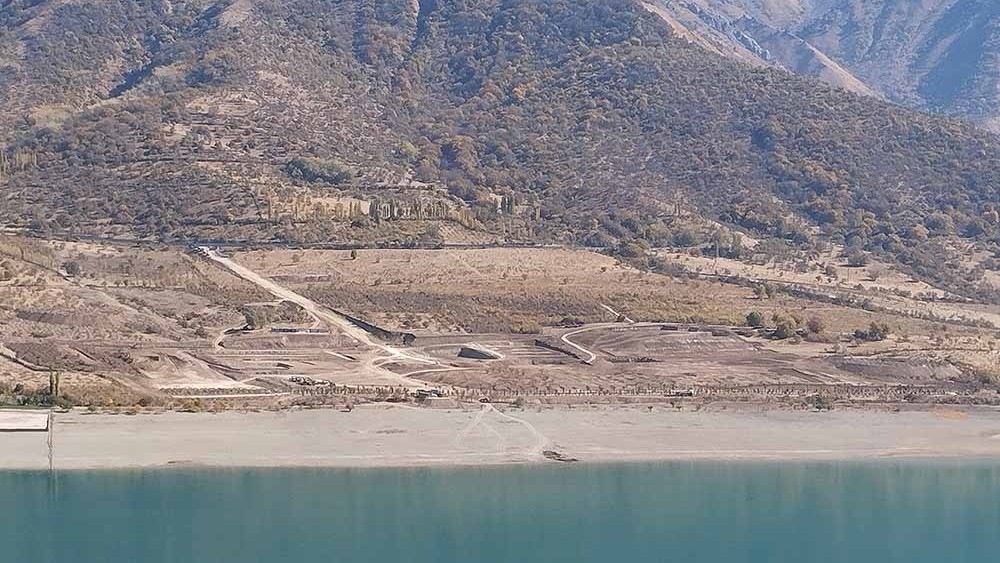
Public hearings in Gazalkent, Uzbekistan, for the Sea Breeze Uzbekistan investment project have revealed conflicts with national law and international environmental obligations. The project involves building an all-season resort complex, a new town for 10,000 residents, on 577 hectares of the Ugam-Chatkal National Natural Park. The presentation for the development, located on the shores of the Charvak Reservoir, brought together officials, local residents, experts, and journalists, raising questions about the ecological safety of a region that is the key source of drinking water for the capital, Tashkent.
A key governing document, Cabinet of Ministers Resolution No. 490 of August 1, 2025, permits the investor, Sea Breeze Uzbekistan LLC, to conduct construction work concurrently with the development of project documentation until the end of 2029. This directly contradicts Uzbekistan’s Urban Planning Code and the Law on Environmental Expertise, which prohibit construction without an approved project and a positive state environmental review. Despite the absence of an Environmental Impact Assessment, preliminary work – including soil removal and foundation leveling – has already begun on the mountain slopes. The resolution grants the project an “exception” status, effectively exempting it from national laws protecting natural territories.
The resort’s proposed location within the Ugam-Chatkal National Park, part of the “Western Tien-Shan” UNESCO World Heritage site, is a point of significant concern. Uzbekistan has ratified international conventions obligating it to ensure the integrity of such sites. A mission by UNESCO and the International Union for Conservation of Nature (IUCN) has already identified serious threats in the region. Large-scale construction, landscape alteration, and potential water pollution conflict with the area’s protected status. Furthermore, the developer’s plans to landscape the area with non-native species such as palm trees violate the Law on Protected Natural Territories, which prohibits the introduction of alien species that could disrupt the local ecosystem.
Water supply and wastewater management remain central environmental challenges. The Charvak Reservoir supplies drinking water to Tashkent and the surrounding province. The Sea Breeze project proposes a 1400 mm diameter sewer collector at a cost of $10 million, but the technical solution is under scrutiny as a similar design previously resulted in sewage leaks. The resort is expected to dramatically increase the burden on the wastewater treatment plant in the city of Chirchik. At the hearings, representatives from the water utility confirmed plans for the pipeline but could not guarantee against leaks or accidental discharges within the water protection zone. The republic’s Water Code establishes an unconditional priority for the use of water resources for public drinking needs and prohibits the discharge of any wastewater into water supply sources.
The situation is compounded by climatic factors. Observations in recent years, including a low-water year in 2025, show a sustained trend of shrinking glaciers in the Pskem and other rivers that feed the Charvak Reservoir. Due to climate change and periodic droughts, the reservoir often fails to fill to its designed capacity. The construction of a resort city with high water consumption will create additional strain on the region’s water balance. Hydrological modeling predicts a continued shift in flood patterns and a decrease in river flow, threatening not only the project’s viability but also the water security of millions dependent on the Chirchik River basin.
During the hearings in Gazalkent, local residents, farmers, and journalists did not receive specific clarifications from investors or officials regarding the project’s compliance with environmental standards. While Uzbekistan participates in international climate conferences and receives grants for biodiversity conservation, the implementation of large commercial projects often contradicts its stated goals for green development. Experts warn that ignoring the ecological risks of the Sea Breeze project could lead to the irreversible degradation of the unique Western Tien-Shan ecosystem and a decline in the quality of drinking water for the capital region.