
New Reservoirs in Kazakhstan to Secure Water Supply Amid Climate Change
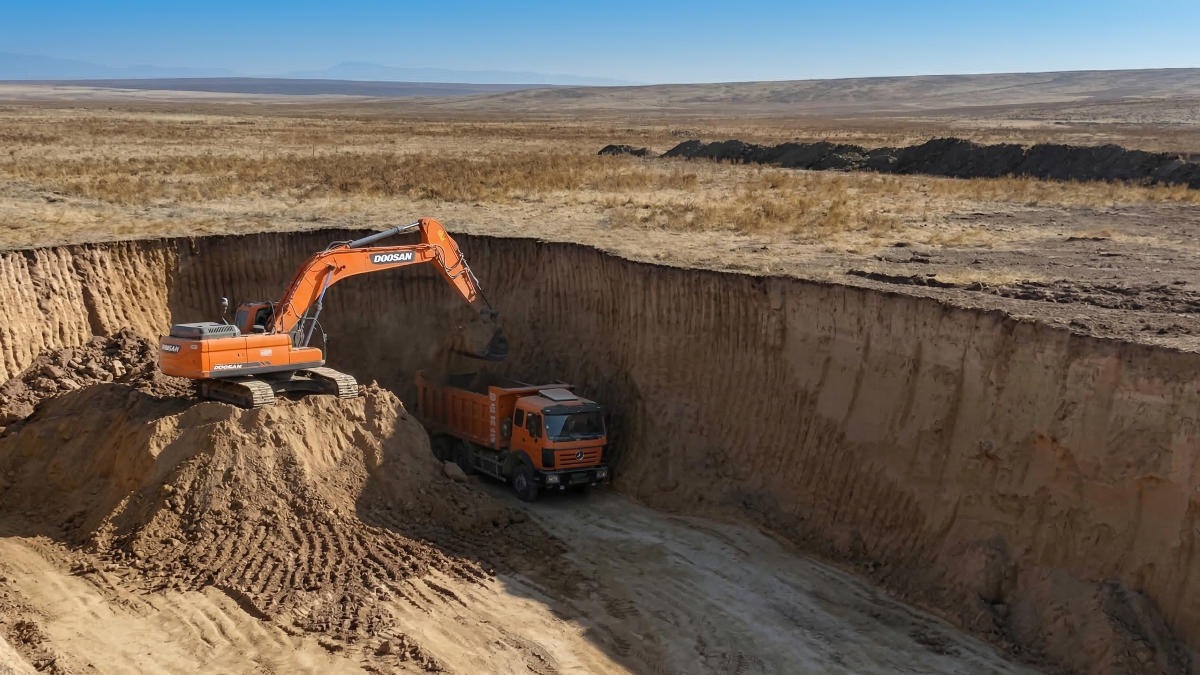
New hydrotechnical facilities in the Turkestan region of Kazakhstan will be commissioned by the end of the year to stabilize regional water supplies in response to a changing climate. The construction of the Baidibek-ata and Karakuys reservoirs will allow for the storage of spring floodwaters for summer irrigation. This infrastructure aims to reduce the agricultural sector’s dependence on irregular precipitation and the seasonal shallowing of local rivers.
The largest of the new projects – the Baidibek-ata reservoir – is being constructed at the confluence of the Balabogen and Ulken-Bogen rivers across an area of 860 hectares. The facility features a dam that is 1.75 kilometers long and 26 meters high, providing a total design capacity of 68 million cubic meters. With construction currently 80 percent complete, the primary function of the hydro-hub is to collect meltwater outside the growing season for gradual distribution during arid months.
Water collected at Baidibek-ata will be redirected into the existing Bogen reservoir. To integrate the two water basins, the 21.7-kilometer Sarkyrama connecting canal is currently under construction. This engineering network, with a throughput capacity of 12 cubic meters per second, will create a sufficient water reserve to irrigate 2,500 hectares of agricultural land. By facilitating the gradual release of water, the system is designed to expand arable areas and minimize flood risks through strict control of the primary reservoir’s water levels.
Concurrently, the construction of the Karakuys reservoir is nearing completion in the Tolebi district. This localized facility is designed to hold 1.2 million cubic meters of water. Its operation will allow an additional 500 hectares of irrigated land to be brought into agricultural production.
The average annual inflow along the Bogen River reaches 165 million cubic meters, though historically a significant portion of this volume was lost during spring floods. The new infrastructure projects are designed to capture and retain these resources. Retaining floodwater and meltwater ensures efficient agricultural utilization – a critical operational shift under the pressures of climate change. The implementation of this storage system effectively transitions the region’s agricultural sector to a model of year-round, controlled water consumption.