
Uzbekistan Expands Hydropower Output to Record 6.5 Billion kWh
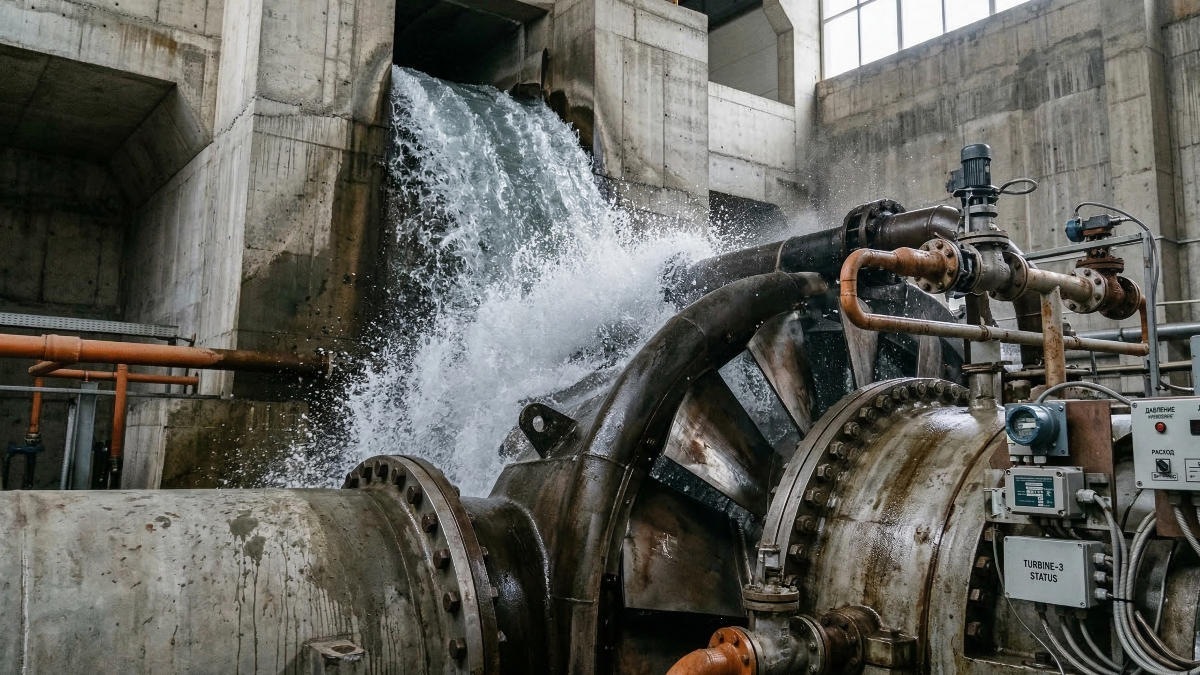
State-owned company Uzbekhydroenergo brought its electricity generation volume to a record 6.5 billion kilowatt-hours by the end of 2025. The increase in generation metrics occurs alongside broader efforts by Tashkent to reduce dependence on gas power plants and diversify the national energy balance amid growing domestic consumption.
Over the eight years of Uzbekhydroenergo’s operations, the structure of hydropower in Uzbekistan has undergone significant changes. While the network consisted of 36 facilities with a capacity of 1,604 megawatts in the company’s founding year, the number of hydroelectric power stations has now exceeded one hundred, with total installed capacity reaching 2,400 megawatts. The expansion of this infrastructure required $1.3 billion in investments, which were directed toward the modernization of 13 existing stations and the construction of 64 new ones.
The functionality of the state company is strictly limited to production. Uzbekhydroenergo Deputy Chairman Farrukh Nurullaev clarified that the operator does not interact with end consumers in the domestic or industrial sectors. The company produces electricity and transmits it to the unified national grid, while territorial and regional networks handle consumer distribution. The core operational mandate is to utilize water resources at hydroelectric facilities efficiently and produce electricity without transmission losses.
Financial and production plans mandate maintaining the pace of commissioning new facilities. Capital investments under state programs totaled $237 million in 2025. Generation is expected to grow by 15 percent in 2026 alongside the launch of 15 new installations with a combined capacity of 152 megawatts. Investments in these upcoming projects are estimated at $264 million.
A notable trend within the industry is decentralization through the construction of micro-hydroelectric power stations funded by private capital. Such facilities supply energy to remote areas without placing additional strain on mainline grid networks. Local entrepreneurs commissioned 16 small stations across Karakalpakstan, as well as the Surkhandarya, Samarkand, and Jizzakh regions in 2025 alone. Two additional facilities commenced operations in early 2026.
Head of the Foreign Investments Department Avazbek Zokirov reported that the total capacity of micro-hydroelectric stations built by private businesses is approaching 30 megawatts. Another two dozen contracts are in the implementation phase, while long-term plans involve the construction of approximately 3,000 such facilities with the participation of local residents and entrepreneurs.
Scaling the network has necessitated the implementation of new dispatch systems. A unified situational center was established to receive data from 4,700 automated water flow monitoring sensors. A portfolio of future construction is being formed concurrently, with fifty projects totaling 3.2 gigawatts currently in development. To execute technically complex structures – such as pumped-storage hydroelectric power stations – Tashkent is attracting engineering expertise from Russia, China, Turkey, Iran, and European states.