
The dispute with RusHydro froze the project of the Verkhne-Naryn cascade of the HPPs
The construction of the Upper Naryn cascade HPP, one of the most ambitious hydropower projects in Kyrgyzstan, remains frozen indefinitely. Yesterday, the country’s President Sadyr Japarov said during the IV National Kurultai that work at the facility would not resume until the full settlement of the debt dispute with the Russian company RusHydro. Despite the presence of new potential investors, obligations under previously terminated contracts make it impossible to restart the project. The situation around the cascade of hydroelectric power stations clearly demonstrates that hydropower remains an industry with critically high capital costs and long-term risks, where legal and financial disagreements can block the development of infrastructure for years.
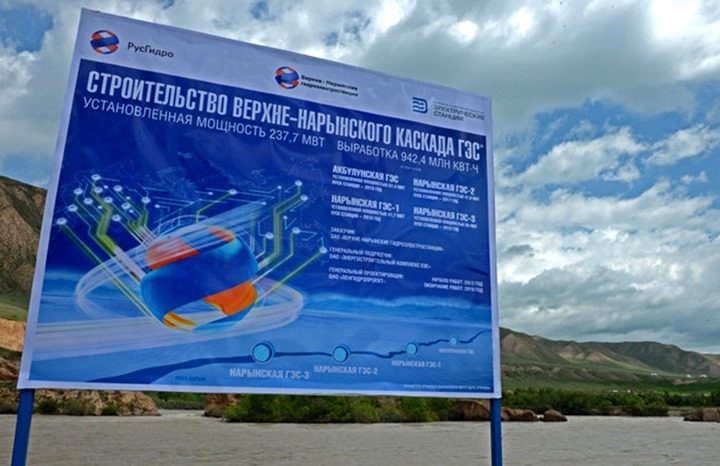
The head of Kyrgyzstan, answering the questions of the delegates of the Kurultai, explained the current state of affairs with utmost frankness. According to him, there are enough people willing to invest in the project, but investors cannot enter the site while there is an encumbrance on it. We are talking about compensation of funds invested by RusHydro at the initial stage of construction. The initial amount of claims was $ 37 million, however, after the loss of the Kyrgyz side in international arbitration and the imposition of penalties, the total debt increased to $ 51 million. The President described the situation metaphorically, noting that the country is forced to “pay for samsa, which did not eat.” There are virtually no capital facilities at the facility, only containers are located there, but legal obligations remain in force.
The history of this long-term construction dates back to 2012, when the governments of Kyrgyzstan and Russia signed an agreement on the construction of a cascade of four hydropower plants. The operator was Verkhne-Naryn HPPs CJSC, created on a parity basis by RusHydro and the Kyrgyz state-owned Electric Stations company. The estimated cost of the project exceeded $ 400 million, which is typical for hydropower, which requires enormous initial investments with a long payback period. However, already in 2015, problems with financing and land acquisition began, and in 2016 Kyrgyzstan unilaterally denounced the agreement, hoping to find new partners.
This step turned into a protracted legal conflict. Since capital-intensive projects are always protected by strict contractual obligations, RusHydro initiated proceedings to return its investments. Litigation went on for several years. In July 2022, arbitration in Hong Kong ruled in favor of the Russian company, recognizing Bishkek’s obligation to compensate for costs. Attempts to challenge this decision or transfer the debt to domestic sovereign obligations, as stated by the chairman of the Cabinet of Ministers Akylbek Japarov back in 2022, did not lead to the closure of the issue.
The complexity of the implementation of such projects is also confirmed by the chronology of contradictory statements. Back in the spring of 2025, in April, Energy Minister Taalaibek Ibraev expressed hope for the start of construction in May, claiming that agreement with the Russian side had been reached. At the same time, the representative of RusHydro, Sergey Machekhin, confirmed the company’s readiness to cooperate in any format, despite financial disputes. However, as the President’s statement at the end of the year showed, legal realities turned out to be stronger than political intentions. The contract has not expired at the time of its unilateral termination by the Kyrgyz side, which creates a reinforced concrete basis for financial claims.
The experience with the Verkhne-Naryn cascade of hydroelectric power plants is not the only example of the difficulties of foreign investors in the hydropower industry of the region. Previously, similar problems were experienced by Inter RAO, which planned to participate in the construction of Kambar–Ata HPP-1, but withdrew from the project due to the lack of government guarantees for the return of investments. This confirms the thesis that without stable legal and financial mechanisms, the risks of losing investments in hydropower outweigh the potential benefits.
At the moment, the Kyrgyz authorities plan to pay off the debt in 2026. According to Sadyr Japarov, negotiations are continuing, but the strategy has already been determined: to pay $ 37 million (or the full amount, taking into account fines) and only after that transfer the project to a new company. In the meantime, the site of the future cascade of HPPs remains a monument to unrealized ambitions and a reminder of the price of unilateral decisions in the field of large investments.
Alexander Eskendirov (Rivers.Help!)
Original (in Russian): Дорогие самсы: спор с «РусГидро» заморозил проект Верхне-Нарынского каскада ГЭС