
HPPs and reservoirs accelerate the drying up of the rivers of Kazakhstan
River flow in Kazakhstan has decreased by almost a third, as evidenced by the latest World Bank report. Experts in the comments for the TV channel “24KZ” emphasize that the reasons for such a sharp drop in the water level lie not only in global climate change. The anthropogenic factor has a significant and sometimes decisive negative impact, in particular, the active development of hydropower and the regulation of the flow of transboundary rivers by neighboring states. The construction of new hydroelectric power plants and reservoirs in the upstream countries, aimed at extracting economic benefits, accelerates the depletion of the region’s water resources, endangering environmental safety.
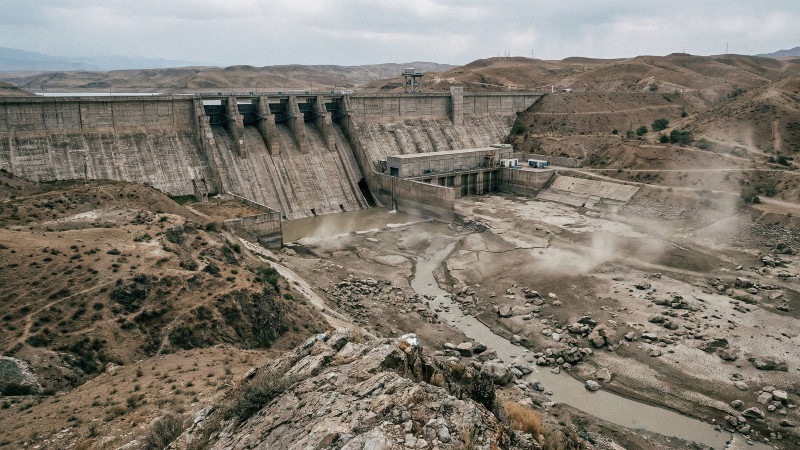
Interstate agreements on transboundary rivers are in force in Central Asia, but experts point out their imperfection. These documents regulate only the issues of mechanical separation of water volumes, ignoring the need to preserve and replenish it. Bulat Yessekin, coordinator of the Central Asian Platform on Water Resources Management and Climate Change, notes that the construction of hydroelectric power stations and the creation of reservoirs in combination with the climate crisis aggravates the situation. According to him, in the current laws and agreements there is not even a concept of replenishing water flows or restoring vegetation in swimming pools. The whole focus is shifted exclusively to rational and economical consumption, since water is considered by relevant departments only as an economic resource, and not as a vital natural component.
The Interstate Coordination Water Management Commission (ICWC), established more than 30 years ago, deals with the regulation of water allocation issues. Despite holding over 90 meetings at the ministerial level, the effectiveness of the body remains in question due to the lack of strict control mechanisms. Vadim Sokolov, head of the IFAS Project Implementation Agency in Uzbekistan, states that the approved limits are often violated. The main cause of failures are the so—called “energy releases” – the discharge or retention of water for the sake of generating electricity at a hydroelectric power station, which runs counter to the needs of irrigation and downstream ecology. In the absence of coercive levers, countries have to rely only on compromises.
Kazakhstan’s dependence on the water policy of its neighbors is critically high: seven out of eight water basins of the country are formed due to transboundary flows. The most difficult situation is in the Aral-Syrdarya basin, where the inflow of water from Uzbekistan has decreased by 38%. This directly affects the state of the Syr Darya, the main artery feeding the drying Aral Sea. In the Shu-Talas basin, the volume of water coming from Kyrgyzstan has decreased by almost a third, which creates risks for agriculture in the southern regions of Kazakhstan, which are critically dependent on irrigation.
The World Bank in the report “Drying of continents: A Threat to our Common Future” (Continental Drying: A Threat to Our Common Future) concludes that the global water crisis is a consequence of erroneous institutional management systems that have been created for decades. The attitude to water exclusively as a commodity for the needs of the economy and energy, without taking into account its functions as a climate regulator, has led to the current shortage. This problem is also relevant for the eastern boundaries of Kazakhstan. Water relations with China on the Irtysh and Ili rivers are regulated by the 2001 agreement, which is declarative in nature and does not impose strict obligations on fair water allocation. Work on a full-fledged document has been underway since 2015, but the process of harmonizing the regulatory framework is slow.
To remedy the situation, a radical revision of approaches to water resources management is required. Experts insist on the creation of fully functioning basin councils with the participation of all water users. This will ensure transparency of decisions and avoid the dictates of hydropower in favor of a balanced approach that takes into account the environmental needs of the territories.
Original (in Russian): ГЭС и водохранилища ускоряют высыхание рек Казахстана