
Afghan Canal Sparks Regional Water Management Concerns
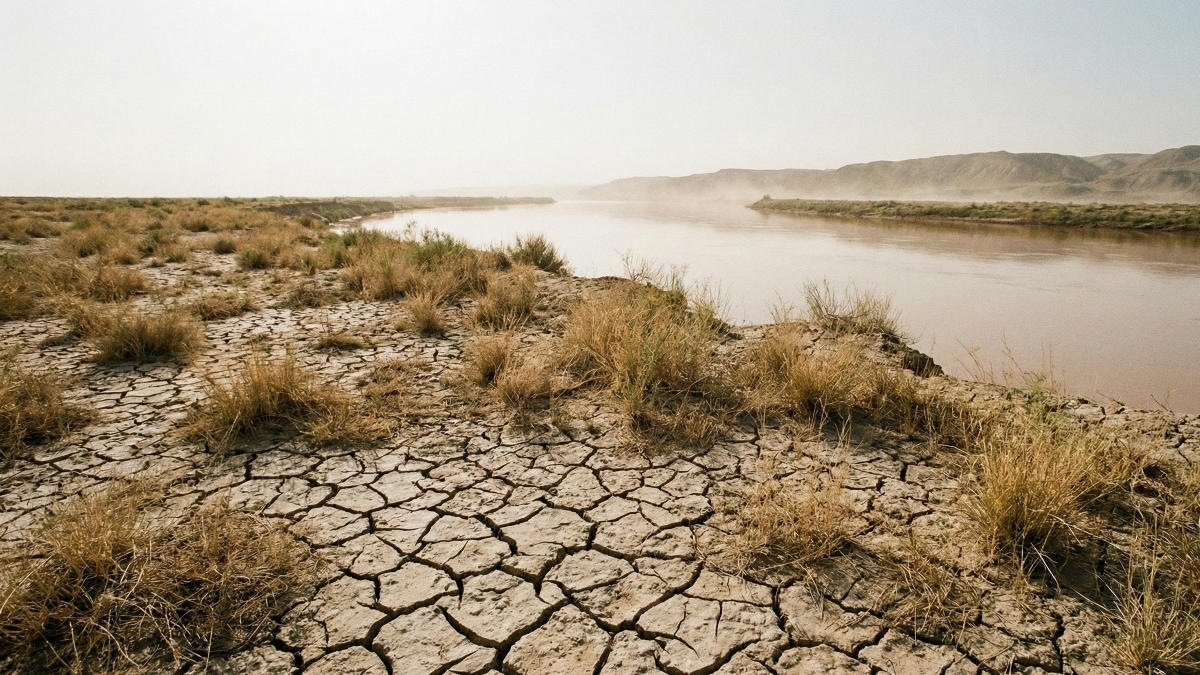
Afghanistan’s Qosh Tepa canal, a major infrastructure project designed to divert water from the Amu Darya river for irrigation, is generating significant transboundary concerns across Central Asia. The canal draws from one of the region’s most critical shared watercourses. For downstream countries–primarily Uzbekistan and Turkmenistan–the Amu Darya is a vital source for agricultural production and the stability of rural communities, placing the canal’s development far beyond a domestic Afghan issue.
Concerns among regional experts stem from the project’s large scale and the absence of an inclusive, basin-wide management framework that includes Afghanistan. Afghanistan is not a party to the primary post-Soviet agreements governing the distribution of the Amu Darya’s waters. As a result, discussions regarding the canal’s potential impact are occurring outside of official multilateral structures.
There is a persistent concern over the lack of a structured platform for assessing such projects at an early stage, before they are perceived as regional risks. The pace of infrastructure development in the region often outpaces the creation of mechanisms for joint impact assessment and management. Analysis of the Qosh Tepa project increasingly frames water flow management as a key factor shaping regional political and economic relations, highlighting the lack of a sustainable mechanism for coordinating its transboundary effects.
In this context, an initiative by Kazakhstan to establish a specialized International Water Organization within the UN system has gained relevance. The proposal aims to address this specific institutional gap by creating a neutral forum for technical and expert discussion of transboundary water projects before they escalate. The Qosh Tepa canal, as a unilateral undertaking rather than the product of an international agreement, could serve as a test case for such a preventive mandate.
While the project is already under construction and its cross-border consequences are being actively discussed, it has not yet evolved into a formal regional dispute. This presents an opportunity for professional dialogue without entanglement in political or status-based debates. The current situation is defined by transboundary impacts without a corresponding transboundary mechanism, as the project, located entirely within Afghanistan, affects downstream states but remains detached from any multilateral consultative framework.
Participation in multilateral formats would offer Afghanistan several advantages. It could help counter negative external rhetoric, as the project is currently discussed in foreign media with alarmist scenarios and little Afghan input. Engagement could also help legitimize the flagship project, even without formal political recognition of the current government, thereby reducing the risk of diplomatic pressure. Furthermore, multilateral cooperation would enhance the canal’s long-term sustainability by mitigating the risk of water disputes and the broader politicization of water resources.
Speculation about a potential “water for recognition” exchange is considered unlikely, as this approach has generally been rejected by Kabul. A more probable outcome is a pragmatic calculation to reduce external risks to the canal project while maintaining a firm position on sovereignty. The situation underscores the need for institutional dialogue based on technical cooperation and the integration of Afghanistan into regional water resource management.
For Central Asian states, Afghanistan’s participation in multilateral water structures would serve to mitigate risks. Enhancing Afghanistan’s food and water security is in the interest of the entire region. Within the C5 platform, a stable Afghanistan is viewed not as an end in itself but as a prerequisite for long-term development, deeper interconnectivity, and a stronger, more autonomous regional position.