
Tajikistan Taps Central Bank Reserves for Rogun Dam Project
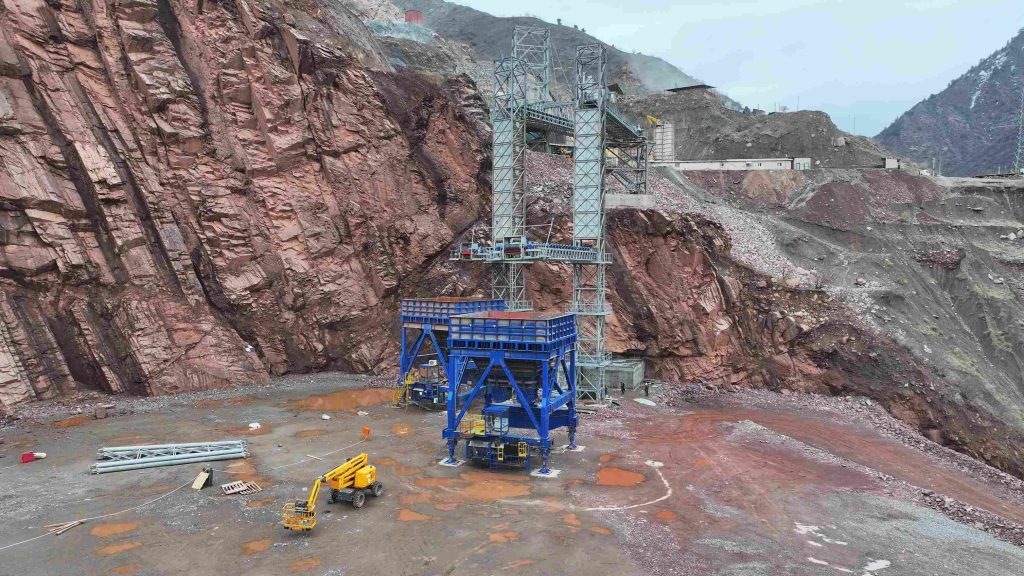
Tajikistan’s lower house of parliament has approved legislation to finance the construction of the Rogun Hydropower Plant (HPP) using the National Bank’s reserve funds. The measure redirects a surplus of 916 million somoni–approximately $100 million–from the central bank’s 2024 reserve fund to the state budget. These funds are specifically allocated to continue work on the strategic energy project, aiming to mobilize domestic resources and reduce dependence on external borrowing.
The government has framed the project as essential for achieving national energy independence, a goal set for 2027. The state budget for 2026 allocates approximately 15 billion somoni, or over $1.6 billion, to the fuel and energy sector, with a significant portion designated for the completion of the Rogun HPP. Since 2008, total expenditure on the project has exceeded 48.1 billion somoni.
In addition to domestic funding, the government is pursuing international financing. Agreements totaling over $2 billion have been secured with development partners, including grants from the World Bank and loans from the Asian Infrastructure Investment Bank, the Islamic Development Bank, and various Arab funds. Negotiations are also underway to secure an additional $1.7 billion.
Analysis by the rating agency Standard & Poor’s estimates the remaining construction cost for the Rogun HPP at $6.4 billion. It is projected that a consortium of international partners will finance half of this amount, with the state budget and project revenues covering the remainder. Part of the external financing is conditional, with some grant support contingent on Tajikistan’s “least developed country” status, which is scheduled for review in 2026.
Upon completion, the Rogun HPP is set to become the largest hydroelectric station in Central Asia, with a projected capacity of 3,780 megawatts from six 630-megawatt turbines. Two turbines are already operational, having been launched in 2018 and 2019, and generated over 1.2 billion kilowatt-hours of electricity in 2024. Full commissioning of the plant is anticipated by 2029, at which point its annual output is expected to surpass 14.5 billion kilowatt-hours.