
Abai Region Initiates Large-Scale Hydropower and Thermal Energy Projects
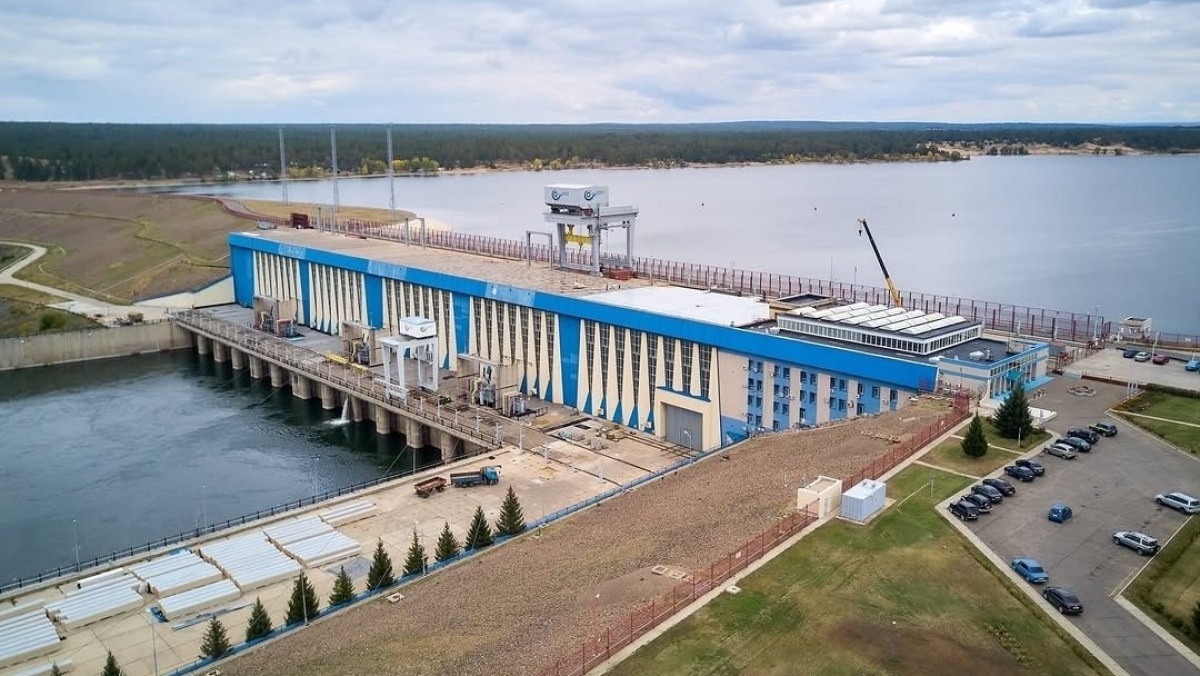
The Abai region is initiating its most significant package of energy projects in decades, driven by increasing demand from new residential developments, social infrastructure, and industrial growth. Plans include the construction of several hydroelectric power plants on the Irtysh River and the development of Thermal Power Plant 3 (TPP-3) in Semey. Many of these proposals originated 50 years ago and are now being revived under current economic conditions with the involvement of international investors.
A series of major hydroelectric facilities – including the Bukhtarma, Ust-Kamenogorsk, and Shulbinsk plants – already operate on the Kazakhstan section of the Irtysh River. Regional plans now call for at least four additional stations within the Abai region. Samruk-Energy is currently developing two of these: the Semey and Akzhar hydroelectric power plants (HPPs). The Semey HPP is slated for construction within the Abai region’s administrative borders, while the Akzhar HPP will be located in the neighboring Pavlodar region, though its reservoir will extend into Abai territory.
Both projects remain in the design documentation phase, with final technical parameters and economic valuations pending the completion of feasibility studies. The Semey HPP is included in the national electricity development plan through 2035. Developers intend to conduct detailed assessments of the impact on agriculture, shipping, and the hydrological regime of the Irtysh during the planning process. Currently, the Abai region’s electricity is supplied by ten stations with a total installed capacity of 885.7 MW, of which the 702 MW Shulbinsk HPP is a primary component.
The Semey HPP is a reintroduction of a decades-old proposal formerly known as the Bulak HPP. Conceived in the 1980s and extensively discussed 15 years ago, the project was intended as the fourth station in the Irtysh cascade. Its primary function was to serve as a counter-regulator for water releases from the Shulbinsk HPP. Previous iterations estimated construction would take four and a half years and involve a 3,272-hectare reservoir, potentially submerging agricultural land and arable soil.
Under the current plans, the Semey HPP will level the uneven weekly and daily water releases from the Shulbinsk HPP, enabling that station to cover peak loads and operate at its full installed capacity. This is expected to increase the regulating capacity of the Shulbinsk HPP to approximately 500 MW. The project is a joint effort between Samruk-Energy and Nebras Power, following an agreement between the governments of Kazakhstan and Qatar. River basin authorities noted that the project aims to mitigate downstream fluctuations caused by varying electricity demand.
Beyond the Semey HPP, regional authorities have signed a memorandum of cooperation with JelSu Energy to build three additional plants downstream from Semey: the Belokamenka, Izvestkovka, and Akzhar HPPs. These facilities have a combined proposed capacity of 900 MW. Implementation will proceed in stages, starting with feasibility studies and infrastructure development. Proponents suggest these projects will stimulate agriculture, fisheries, and tourism while attracting specialists in hydraulic engineering to the region.
The concentration of hydraulic projects has raised concerns regarding the environmental and logistical health of the Irtysh River. Experts and local residents have expressed concern that multiple dams may interfere with river navigation and increase water consumption. Larger reservoir surfaces are expected to lead to higher rates of evaporation and ground filtration, potentially lowering river levels. Critics warn that these cumulative effects could threaten the long-term viability of the waterway.
Questions have also been raised regarding the necessity of extensive hydroelectric development given other regional energy projects. A 700 MW condensation power plant is under construction in Kurchatov, and the 300 MW TPP-3 is planned for Semey. These projects provide a combined capacity comparable to a nuclear power plant, leading some observers to argue the region has sufficient power, especially in light of national electricity surpluses. There are suggestions that any new hydroelectric dams should be designed to support roadway infrastructure to alleviate the city’s transport needs.
Work on the TPP-3 project in Semey is proceeding alongside the hydroelectric plans, with a projected completion date in December 2029. The city currently relies on 22 coal-fired heat sources, which contribute to environmental challenges and heat shortages that have hindered local development. The new plant will be situated on a 500-hectare site near the village of Stepnoy. Engineering surveys and preparatory works are underway, with funding expected from a mix of corporate and borrowed sources. The project will eventually include 40 kilometers of new heating networks to provide a centralized supply for the regional center.