
Threat to six countries: geologists are monitoring the Sarez Lake around the clock
Tajik specialists continue to continuously monitor the state of Lake Sarez due to existing geological risks. Details about the current situation with the reservoir and safety measures were shared by the head of the Center for the Study of Climate Change and the Ozone Layer of Tajikistan Sattor Saidov. According to him, monitoring the condition of the high-altitude lake remains a priority task for the relevant departments of the republic.
In recent years, projects aimed at modernizing surveillance and early warning systems, known as EWS, have been actively implemented in the region. As the expert noted, both domestic and international specialists take part in this work. In particular, the installation of modern sensors, the establishment of communication channels and the installation of warning systems were carried out. These measures are designed to ensure the safety of settlements located along the beds of the Murgab and Bartang rivers, which are in the zone of potential risk.
The control process includes a range of different activities. Periodically, aerial flights of the territory are carried out, satellite monitoring is conducted, and field inspections are organized directly on the spot. Sattor Saidov explained that the current data indicate the continuation of work on updating the technical means of observation. This activity is carried out in close cooperation with international partners, which makes it possible to use best practices and technologies to assess the situation.
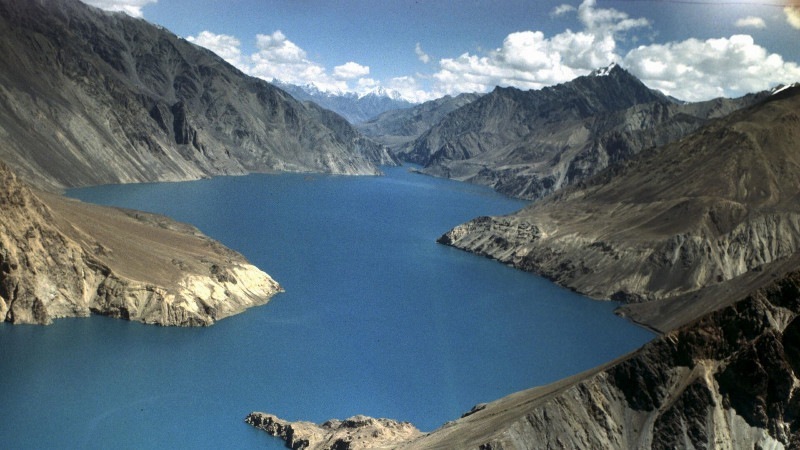
Sarez Lake, geographically located on the territory of Murghab district of Gorno-Badakhshan Autonomous Region, is located at an altitude of more than 3.2 thousand meters above sea level. The reservoir has an impressive scale: according to official data, it stretches for almost 70 kilometers in length, reaches a depth of 500 meters, and the total volume of accumulated water is estimated at 17 cubic kilometers. Due to its characteristics and location, the lake is in the focus of attention not only of Tajikistan, but also of other Central Asian countries, Afghanistan and Iran.
The history of the reservoir has a little over a hundred years. The lake belongs to the blockage type and was formed as a result of the catastrophic earthquake of 1911, when the collapsed rock blocked the channel of the Bartang River, creating a natural dam – the Usoysky blockage. In popular science, Sarez is often called the “Sleeping Beauty” for its picturesque views and at the same time the “Sleeping Dragon” because of the hidden threat. The location of the lake is characterized by significant seismic activity, which dictates the need for close attention to the strength of the natural dam.
The scenario of the possible destruction of the Usoysky blockage is considered by experts as a cross-border event. In the event of a dam break and the formation of a giant flood, vast territories of Tajikistan, Afghanistan, Uzbekistan, Turkmenistan, Kazakhstan and Iran may enter the affected area. The main impact of the disaster may fall on villages, infrastructure and agricultural land located along the banks of the Amu Darya River.
The issue of risk reduction was discussed back in the Soviet period. Then engineers were developing projects for the construction of a hydroelectric power station on the Usoysky blockage, which would allow controlling the water level. However, due to the technical complexity of the implementation and the inaccessibility of the area, it was not possible to build a Dam. To date, round-the-clock monitoring has been installed behind the Sarez Lake. Specialists of the Emergency Situations Committee of Tajikistan monitor the readings of the sensors in real time, recording any changes in the parameters of the reservoir.
Original (in Russian): Угроза для шести стран: геологи круглосуточно следят за Сарезским озером