
New small hydropower plants and tariffs in foreign currency: Kyrgyzstan approved amendments to the law on renewable energy
The Committee of the Jogorku Kenesh on Industrial Policy, Transport, Fuel and Energy Complex, Architecture and Construction at its meeting yesterday considered and approved in the first reading the draft law on amendments to the Law “On Renewable Energy Sources” (RES). The key topic of discussion was the development of the hydropower potential of the Kyrgyz Republic and the introduction of new financial mechanisms to attract investors to the industry.
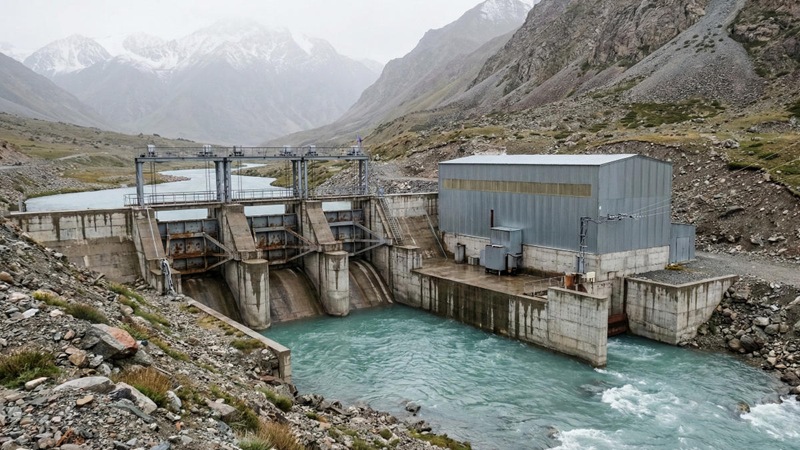
A special emphasis during the meeting was placed on the dynamics of the construction of small hydroelectric power plants. Deputy Minister of Energy Altynbek Rysbekov informed the deputies of the latest statistics: by the end of 2025, small hydropower plants with a total capacity of 115-120 MW were commissioned in Kyrgyzstan. As a successful example, the official cited the launch of a small hydroelectric power station in the city of Kara-Kul with a capacity of 18 MW. The ministry assured that in 2026 it is expected that this trend will continue and new generating facilities will be commissioned.
During the discussion on the parameters of hydropower development, Deputy Kunduzbek Sulaimanov proposed to revise the power criteria for small hydropower plants. The parliamentarian took the initiative to raise the installed capacity bar for such facilities from the current 30 MW to 50 MW. According to him, such consolidation of HPP projects is in demand by potential investors and will allow to compensate for the shortage of electricity in the republic faster. The Deputy Minister noted that this proposal is already under consideration in the Ministry and can be integrated into plans for the development of green energy.
The presented draft law, developed in pursuance of the decree of the President of the country, provides for significant changes in the tariff policy. One of the main innovations is the possibility of setting electricity tariffs in foreign currency when implementing investment projects and public-private partnership projects. Currently, tariffs are approved by the Cabinet of Ministers exclusively in national currency. The Ministry of Energy of Kyrgyzstan expects that fixing prices in foreign currency will reduce risks for foreign partners and improve the investment climate.
The document also introduces the concept of “auction” as a mechanism for selecting renewable energy projects. It is assumed that the tariff will be determined during the bidding process by lowering its maximum level, which should ensure transparency of procedures and competitiveness. In addition, the concept of the grace period of the marginal tariff is being clarified.
Deputies paid attention to the issues of guaranteed purchase of electricity. In particular, the abolition of the 1.3 coefficient to the tariff was discussed. Deputies Bakhridin Shabazov and Mederbek Sakkarayev expressed concern about the possible outflow of investors, calling such a step premature in the conditions of energy shortage. The Deputy Minister of Energy explained that the redemption tariff from small HPPs will remain unchanged and will amount to 4.42 soms per kWh, and the cancellation of the coefficient will be compensated by the right of investors to fix prices in foreign currency as part of the medium-term tariff policy.
The issue of microgeneration was also raised at the meeting. The deputies clarified the possibility of buying back excess energy from private individuals using solar panels. The representative of the Ministry of Energy confirmed that the legislation provides for mechanisms for mutual settlements with citizens for the electricity produced. Following the discussion, the committee approved the bill, noting the need to finalize certain norms for the second reading to protect the interests of investors.
Alexander Eskendirov (Rivers.Help!)
Original (in Russian): Новые малые ГЭС и тарифы в валюте: в Кыргызстане одобрили поправки в закон о ВИЭ