
Syr Darya River Basin Faces Prolonged Low-Water Crisis
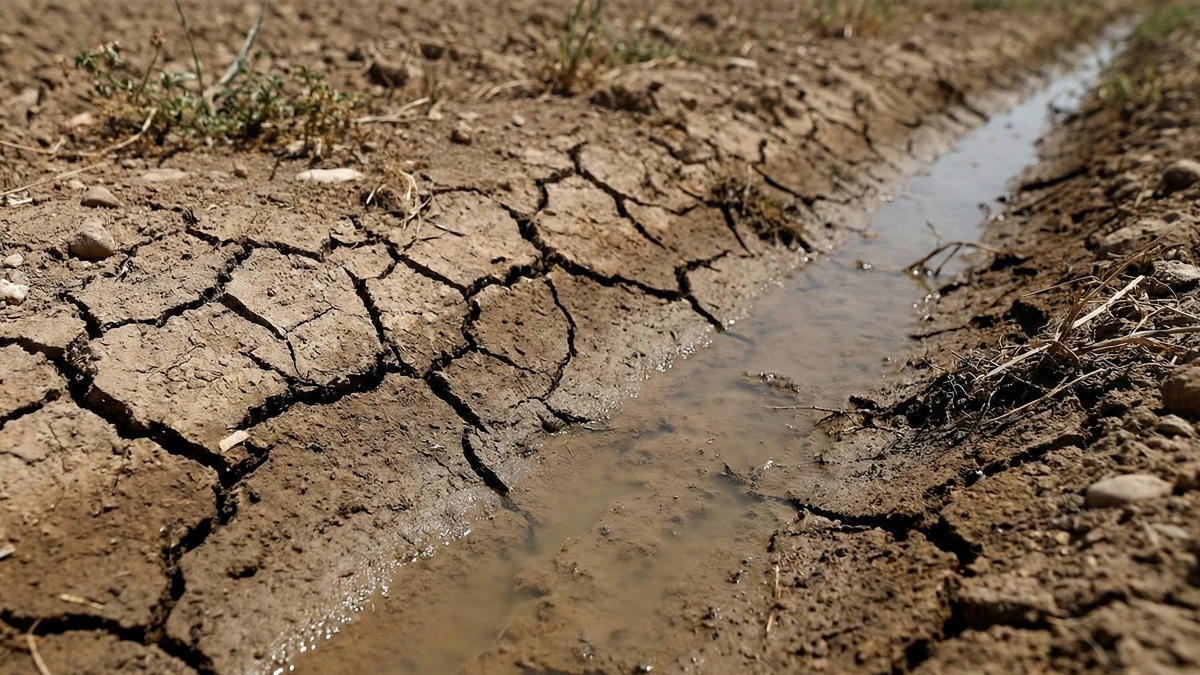
Reduced flow in the Syr Darya has become an objective reality, as Central Asia’s largest river basin enters its fifth year of a prolonged low-water period. Authorities and environmental agencies are adapting water resource distribution to balance the needs of agriculture with the preservation of the Small Aral Sea ecosystem. The current situation is tense, necessitating strict control over water consumption.
The Naryn–Syr Darya river system is regulated by a cascade of six major reservoirs across Kyrgyzstan, Uzbekistan, Tajikistan, and Kazakhstan, with a total design capacity of 34.6 billion cubic meters. These reservoirs are currently filled to 46 percent of their maximum capacity. Water enters the Kazakhstani part of the basin through the Shardara reservoir, which is receiving 600 cubic meters per second and has accumulated 4.72 billion cubic meters. Downstream, the Koksaray counter-regulator holds 1.38 billion cubic meters. An additional 38 reservoirs are undergoing planned water accumulation ahead of spring fieldwork, with six reservoirs in the Kyzylorda region holding 12.8 million cubic meters – just over a third of their capacity.
Since winter, Kazakhstan’s Ministry of Water Resources and Irrigation has been operating under a worst-case water inflow scenario. The flow through the Koktobe hydrological post into the Kyzylorda region is currently 177 cubic meters per second, with this volume distributed among lake systems, hayfields, and the channel leading to the Aral Sea. The current low-water phase began in 2019, ending a 16-year period of high water when inflow into the Shardara reservoir exceeded 20 billion cubic meters per season. This figure has now stabilized at 12–13 billion, dropping to a low of 10.2 billion in the critically dry year of 2021. From the Syr Darya’s total annual flow of 37 billion cubic meters, Kazakhstan’s needs are estimated at 12 billion, but during low-water cycles, the country receives two billion less. Autumn forecasts for inflow into Shardara were 95 percent met, and no additional volumes are expected.
The water deficit is directly impacting the region’s agricultural sector, which is traditionally focused on rice cultivation. Authorities and the national water management company Kazvodkhoz are working to adapt the industry to new climatic conditions by systematically reducing areas for water-intensive crops. Rice cultivation has been cut from 86,000 hectares several years ago to 81,000 last year, with plans to reduce it further to 70,000 hectares this season. Farmers are being encouraged to diversify to crops like corn and implement drip irrigation systems. The government is subsidizing up to 80 percent of costs for water-saving technologies. Last year, laser land leveling was applied to 60,000 hectares of rice paddies, reducing water consumption by one-fifth.
The Syr Darya river is inextricably linked to the state of the Small Aral Sea. The sea’s current water level is 40.77 meters on the Baltic system, with an accumulated volume of 23 billion cubic meters. The Kokaral Dam, built in 2006, enabled the partial restoration of the northern part of the sea, and in high-water years, excess water was discharged into the dry southern basin. A comprehensive water management development plan aims to raise the Small Aral’s level to 44 meters by the end of 2026. The feasibility study for the dam’s reconstruction is complete, with financing expected from international sources.
The sea’s ecological balance is dependent on its mineralization level. Salinity is currently at 8.8 milligrams per liter, an acceptable level for fish survival and reproduction. An increase beyond the threshold of 12–13 milligrams per liter would lead to the degradation of the fish population. The established hydrological situation requires constant monitoring, as the Syr Darya’s water deficit has ceased to be a temporary phenomenon and is now a defining factor for the entire region.