
Construction Halts on Krasnogorsk Hydroelectric Dam on the Irtysh River
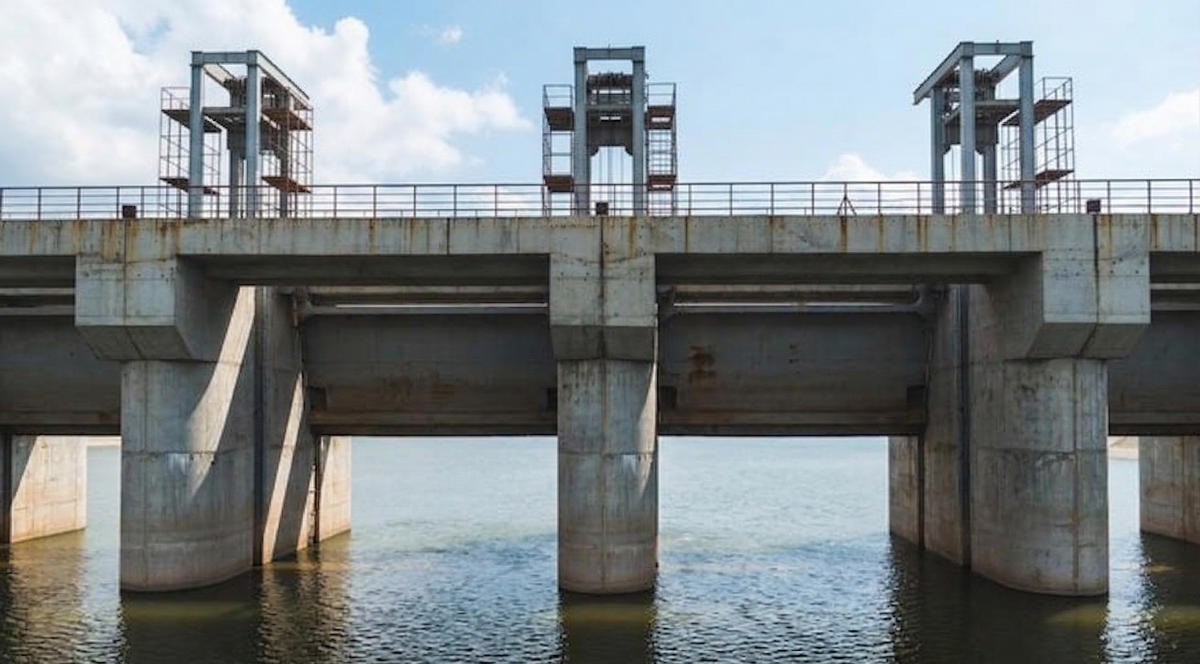
Construction of the Krasnogorsk hydroelectric complex on the transboundary Irtysh River near Omsk has halted once again. In early 2026, the contractor – the Moscow-based company MezhRegionStroy – placed nearly all site workers on administrative leave. Continuing full-scale construction and installation work is impossible due to the necessity of project design adjustments. Over the 15 years since construction began, approximately ten billion rubles have been spent on the facility, yet the structure is only 53 percent complete.
The dam project originated in response to the shallowing of the Irtysh River over several decades, which has degraded navigation and reduced water quality. The new dam was intended to raise the river level, ensure the municipal water supply, and facilitate the creation of a modern waterfront embankment. Modeled on the Novosibirsk dam on the Ob River, the initiative received support from regional authorities under former Governor Leonid Polezhaev. Construction commenced in 2011 under NPO Mostovik, the same company responsible for building the Omsk metro.
It soon emerged that the project documentation for the Krasnogorsk complex, prepared between 2007 and 2008, contained severe errors. According to a former employee, the initial paperwork was drafted superficially without consideration for actual construction. Mostovik independently corrected the project, investing over 700 million rubles of its own funds to rectify the mistakes. By 2014, when funding was exhausted, the company had spent 5.5 billion rubles and subsequently declared bankruptcy. Former executive Oleg Shishov continues to insist on the necessity of completing the facility but acknowledges that the current design still contains serious flaws and safety threats. The Irtysh is a complex river with a shifting channel and a riverbed composed of fine, silty sand – factors that were completely overlooked during the initial planning phase.
Over the past 15 years, a lock and mooring lines were built, but the main structure – the dam itself intended to block the river – remains unconstructed. Ecologist and Omsk State Transport University professor Sergey Kostarev describes the project as completely raw, noting that it recently received another negative state expert review. Construction efforts over the past decade and a half have largely consisted of cyclical earthworks – excavating the island, pouring concrete, dismantling the concrete, and burying the island again. Kostarev emphasizes that permanently mothballing the unfinished structure is the only method to avoid an ecological disaster. Completing the Krasnogorsk dam carries the risk of halting the Irtysh River flow entirely, as well as destroying ash dumps and oil pipelines located along the riverbanks. Furthermore, an expert review from 2009 determined that post-construction, the water from the Irtysh would be rendered completely unusable for drinking purposes.
The scientific community remains divided on the project’s viability. Mikhail Bolgov of the Institute of Water Problems at the Russian Academy of Sciences highlights that reservoirs generally alter the water regime and biological life of rivers negatively. Constructing a facility in the Irtysh floodplain introduces a severe risk of flooding adjacent territories, including residential communities, the Novoaleksandrovka settlement, and the Omsk Refinery pier. His colleague Vitaly Belikov offers a different perspective, noting that a low-head dam opens fully during seasonal floods without affecting the river, while increasing water volume and diluting pollution during low-water periods to guarantee municipal water intake. Hydrological engineer Sergey Bednaruk from the same institute maintains that the facility is necessary but should have been built with a reservoir to regulate runoff during flood-prone years, such as 2024. Without a water storage unit, the dam cannot regulate the flow, and none of the proposed project variants ever included a reservoir.
Inland navigation professionals see no practical purpose for the new hydraulic structure. Andrey Babichev, deputy director of the Irtysh Shipping Company, states directly that the dam is entirely unnecessary for shipping operations. It will only raise the water level by 1.5 meters for a stretch of 30 to 40 kilometers upstream to Omsk. The actual cause of the Irtysh River’s shallowing stems from hydroelectric stations in neighboring Kazakhstan, which discharge water based on electricity generation requirements rather than the natural needs of the river. The only practical benefit of the Krasnogorsk complex would be a road built over the dam to provide an additional river crossing. However, due to the specific characteristics of the river and the structure’s design, routing vehicular traffic over the Omsk dam is considered highly unsafe.
Ultimately, the delayed Krasnogorsk hydroelectric project on the Irtysh River has become a classic white elephant – a structural burden too costly to abandon, yet increasingly difficult to finish. A timeline for the resumption of construction work remains entirely unknown to environmental monitoring agencies, including Rivers without Boundaries.