
Central Asian Environmental Coalition Warns of Renewable Energy Impact
A coalition of environmental organizations in Central Asia has issued a set of recommendations to regional governments, warning that the accelerated construction of renewable energy facilities may cause ecological damage that eventually outweighs the climate benefits of the transition to green generation. The document, finalized following the Regional Environmental Summit in Astana, is addressed to ministries of energy and ecology, international development banks, and intergovernmental structures.
Kazakhstan currently leads the region in the deployment of wind, solar, and hydroelectric power as it seeks to replace fossil fuels and develop green hydrogen production. However, renewable energy projects – though formally considered sustainable – are frequently resulting in the destruction of habitats for rare species. This impact is most pronounced in the wind energy sector, as Kazakhstan and neighboring nations are situated along primary Eurasian bird migration corridors.
In the Karatau ridge, where the Zhanatas and Shokpar wind farms are located, more than 36,000 rare eagles migrate annually. Ornithological telemetry data from 2011–2021 indicates that each wind station causes an average of 34 bird deaths per year, with the two facilities combined accounting for the loss of 85–95 eagles annually. This creates an ecological trap where traditional nesting sites within the radius of wind farms remain occupied for decades, as new individuals replace those killed only to meet the same fate.
Experts from the Karaganda Regional Ecological Museum indicate that wind farms placed without sufficient ornithological data become traps for migratory species. While technical solutions to minimize these impacts exist, they are only effective when proper placement is a mandatory state requirement rather than a voluntary guideline. Concerns also surround the Hyrasia One project on the Ustyurt plateau, which involves over 5,000 wind turbines and millions of solar panels. The site borders the Ustyurt Nature Reserve and threatens critically low populations of the goitered gazelle and Ustyurt urial.
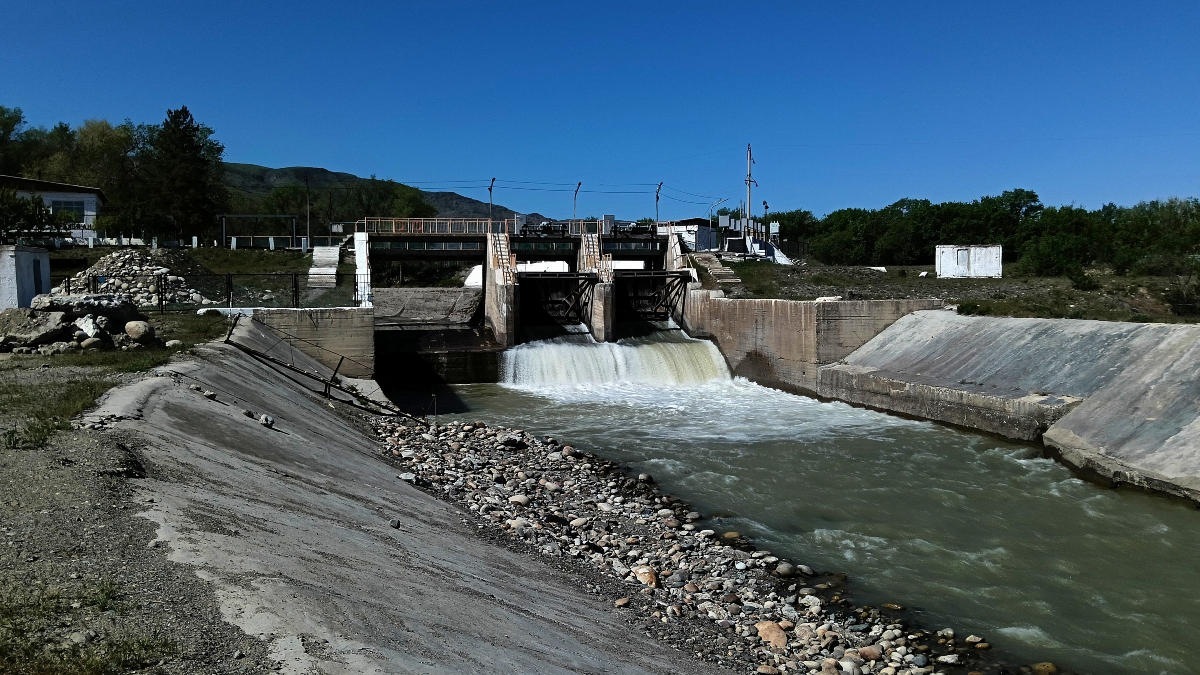
Associated infrastructure for solar power, such as roads and power lines, poses risks by fragmenting habitats and providing easier access for poachers in previously remote areas. In the hydroelectric sector, the Balkhash–Alakol basin has seen the number of dams increase from fewer than ten in 2000 to approximately 50 completed or under construction by 2026, with another 45 proposed. These dams fragment river networks and block fish migration, threatening endemic species like the Balkhash marinka and the Seven Rivers Siberian salamander.
On the Ili River, the Kapshagay hydroelectric complex suppresses the spring floods necessary for tugay forests and spawning grounds, while the Kora River cascade has fundamentally altered habitats once used by the snow leopard. Representatives from the Center for Biodiversity Research and Conservation identify the cause of this confrontation as a disconnect between climate policy and biodiversity conservation. In most regional states, these agendas exist in parallel without intersecting during the planning stages.
Policy documents such as Kazakhstan’s Strategy for Carbon Neutrality until 2060 and its 2035 national contributions focus on energy targets while largely omitting ecosystem preservation. This contrasts with the Paris Agreement and the Kunming–Montreal Global Biodiversity Framework, which link nature conservation directly to climate goals. Organizations including Rivers without Boundaries argue that biodiversity loss creates long–term climate risks that are currently overlooked, noting that environmental impact assessments are frequently based on estimates rather than rigorous quantitative models.
To resolve these contradictions, the coalition proposes conducting strategic environmental assessments of energy infrastructure prior to approval and accounting for the cumulative impact of all renewable sites. Recommendations include prioritizing degraded industrial lands for new stations and excluding protected areas or high–value biodiversity zones from renewable energy auctions. The group also calls for mandatory impact monitoring, independent audits of ecological assessments, the protection of remaining free–flowing rivers, and the establishment of minimum flow standards for reservoirs.