
Central Asia Eyes Unified Energy System Combining Nuclear and Hydro Power
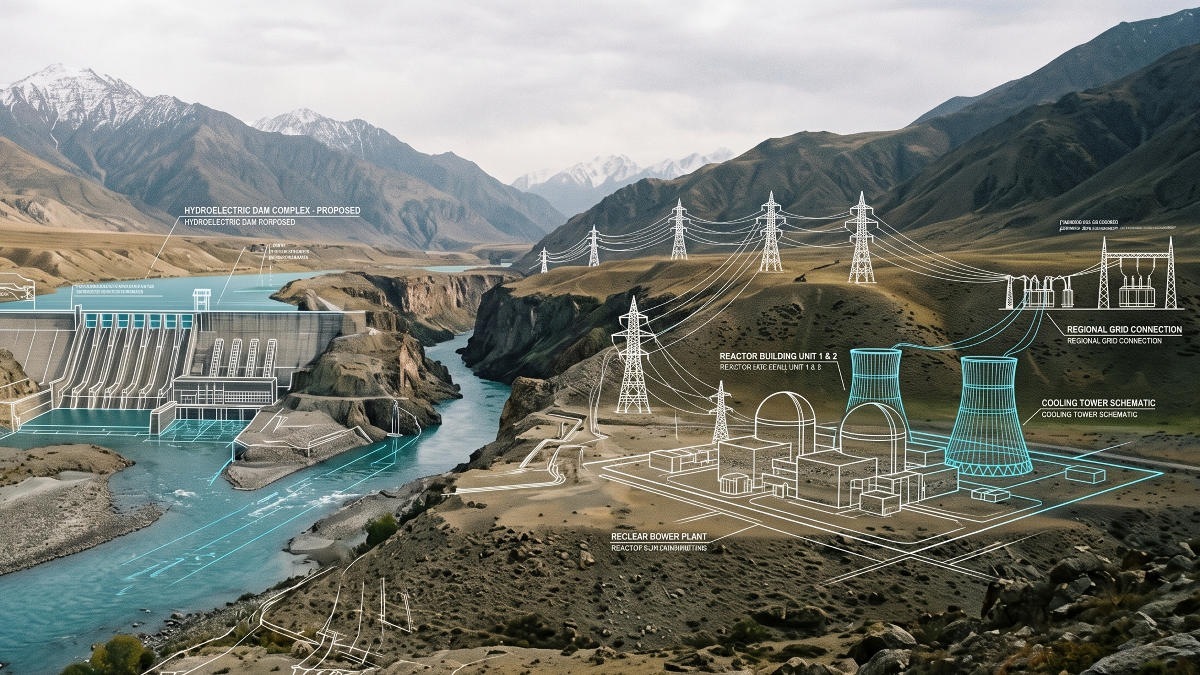
The Russian-Kyrgyz Development Fund has proposed a regional market configuration that forms a renewed unified energy system for Central Asia by linking nuclear and hydroelectric power. The concept establishes a technological symbiosis between nuclear generation in Kazakhstan and Uzbekistan and hydroelectric plants in Kyrgyzstan and Tajikistan to provide a stable and flexible carbon-free energy supply.
Under this model, nuclear power plants provide a stable base load with a constant power output, while mountain rivers and reservoirs provide the system with necessary flexibility. Hydroelectric units can adjust capacity within minutes to manage daily peaks and troughs in consumption, allowing regional countries to address seasonal electricity deficits through cross-border power transfers from neighboring states.
A transition to a comprehensive common market requires moving from individual export–import contracts toward unified energy trading mechanisms. In practice, this necessitates the large-scale modernization of interstate power lines and the synchronization of dispatch schedules – a process required for power stations to operate consistently across the entire macro-region.
The Kambar-Ata-1 hydroelectric project on the Naryn River serves as the flagship for this regional integration. Currently under joint implementation by Kyrgyzstan, Kazakhstan, and Uzbekistan, the facility is designed for a dual purpose: supplying electricity to the regional grid and regulating water flow to ensure agricultural irrigation in downstream areas during arid periods.