
Construction of the Rogun Dam: environmentalists warn about the loss of biodiversity
International financial institutions and the Government of Tajikistan have faced harsh criticism from the environmental community in connection with plans to build the Rogun Dam. A coalition of 25 non-governmental organizations from around the world, including those based in Central Asia environmental coalition “Rivers without boundaries” (Rivers without Boundaries), sent an official appeal to the world Bank, and ten other credit institutions, pointing out the critical flaws in the impact assessment of the project, a giant Dam on natural ecosystems. The claims are based on the independent expert report “Rogun Dam against biodiversity”, the authors of which claim that the submitted documentation not only ignores the real scale of environmental losses, but also contains direct manipulation of international standards for nature protection.
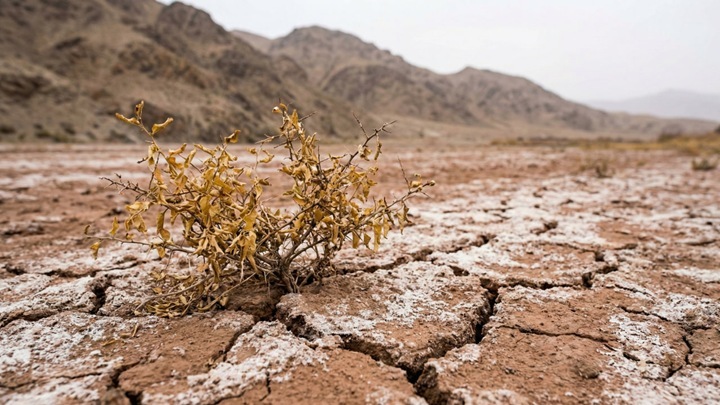
According to the report, the updated Environmental and Social Impact Assessment (ESIA) of the Rogun Dam construction project does not comply with the World Bank’s key standard ESS6, designed to protect wildlife. Experts point out that the project developers deliberately underestimated the area of valuable natural territories falling into the flood zone and excluded hundreds of kilometers of river ecosystems from consideration. Instead of full-fledged field studies, which should be carried out in different seasons, the project assessment is based on outdated data from ten years ago and fragmentary DNA analysis of water, which does not allow us to judge the number of populations of rare species of fish and animals.
The international coordinator of the ecological coalition “Rivers without Boundaries” Evgeny Simonov, one of the authors of the report, points out that the current version of the project documentation actually legalizes the destruction of the river ecosystem without adequate restoration measures. “The developers of the project documentation made a blatant fraud by refusing to recognize the Vakhsh River in the flood zone as a “natural habitat”, although it fully complies with this definition according to World Bank standards. This allowed them to “turn off” the requirement for compensation of losses for 98% of the Dam impact area. In fact, they propose to turn 170 kilometers of a living, turbulent river into a standing dead body of water, without offering any real measures to compensate for this damage to the river ecosystem and endemic species,” emphasizes Evgeny Simonov.
The report notes that Red book species such as Amu Darya trout, Turkestan catfish, Central Asian otter and birds of prey are at risk. However, experts call the most alarming fact the refusal to assess the impact of the Rogun Dam dam on the lower reaches of the Vakhsh and Amu Darya. The project documentation ignores the impact of changes in the hydrological regime on the UNESCO World Heritage Site — the Tigrovaya Balka Nature Reserve, as well as on wetlands in the Amu Darya Delta with international status. Instead of scientific modeling of the consequences of changes in the flow of water and sediments, the authors of the project documentation refer to some “political obligations” of Tajikistan to maintain the current flow regime, which environmentalists consider an untenable argument.
Regional Director of the ecological coalition “Rivers without Boundaries” Alexander Kolotov draws attention to the fact that political declarations hide the lack of real plans to minimize damage. “We see an attempt to replace serious scientific analysis with political slogans. The statement that filling a giant reservoir for 16 years and the subsequent operation of a cascade of Dams will not affect the ecosystems downstream is nonsense, contrary to the laws of physics and biology, as well as all past experience in the construction of large Dams. Unique tugai forests and red–listed fish species, including the Amudarya shovelnose and pike–like asp, can disappear forever without real protection measures – for example, guaranteed ecological releases simulating natural floods,” notes Alexander Kolotov.
The experts also found that the biodiversity management plan presented in the project documentation does not contain specific measures to save aquatic organisms. Proposed measures such as tree planting cannot compensate for the loss of the last natural floodplain forests and river habitats downstream from the Rogun Dam. Environmentalists demand a radical revision of the environmental impact assessment of the project, the development of a real damage compensation strategy, including regular ecological releases on the Lower Vakhsh and giving the Panj River (which, like the Vakhsh, is the source of the Amu Darya) the status of a “dam-free river” to preserve the remaining biodiversity of the basin. If these requirements are not met, the financing of the Rogun Dam construction project by international banks will not only be a direct violation of their own environmental policies, but will also lead to irreversible loss of biodiversity of regional and global importance.
Original (in Russian): Строительство Рогунской ГЭС: экологи предупреждают об утрате биоразнообразия