
Group Faults IMF, World Bank Reports on Tajikistan’s Rogun Dam
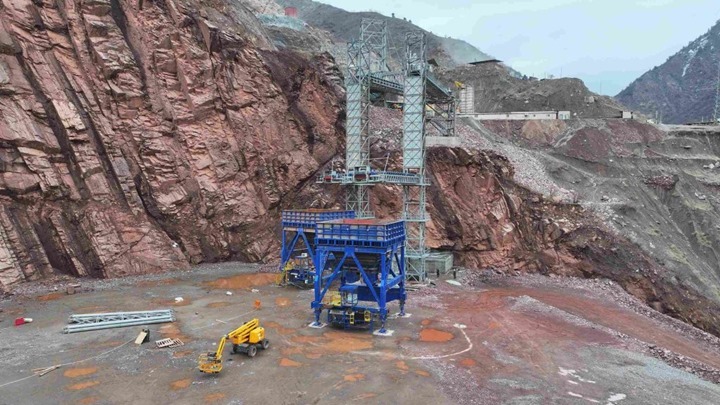
The international environmental coalition Rivers without Boundaries has released an analysis criticizing recent reports from the International Monetary Fund (IMF) and the World Bank on Tajikistan’s Rogun Dam. The group argues the reports promote the dam as a climate solution while downplaying its risks and the viability of alternatives.
The analysis focuses on an IMF technical report, which it says acknowledges the significant fiscal risks of the Rogun project. The group notes the IMF’s finding that the dam accounts for a large share of the state budget, leaving little for other capital investments and hindering energy diversification, such as solar power. According to the IMF data cited, state expenditures on the dam reached at least 3.5% of GDP in 2024, while investments in other sectors decreased. The group also points out that projects classified as separate from the dam–such as the Obigarm–Nurobod highway and CASA-1000 power lines–are directly related to it. Rivers without Boundaries highlights what it sees as a contradiction: the IMF notes cost overruns and delays but also suggests Tajikistan borrow more to complete the project, which the group says goes against previous IMF recommendations to cap spending on the dam at 3% of GDP.
The coalition’s critique of the World Bank’s climate and development report for Tajikistan claims the bank presents the 50-year-old dam design as a primary climate change mitigation and adaptation measure without a thorough comparison to less expensive or faster alternatives. The analysis cites a preliminary environmental and social impact assessment, which projects that methane emissions from the new reservoir could increase the Tajik electricity sector’s greenhouse gas emissions by 60%. The group contends that the World Bank justifies the dam’s over $6 billion cost with long-term climate benefits projected for 2040 and beyond, while these funds could be used for more immediate climate action.
Rivers without Boundaries also points to inconsistencies in the World Bank’s projections. It notes the report suggests the dam’s reservoir will be filled by 2034, five years earlier than the 2039 date in official project documents. The group argues that meeting this earlier deadline would require violating existing water-sharing agreements with downstream Central Asian countries, as Tajikistan lacks the annual water quota to fill the reservoir even by 2039. The analysis also references the World Bank’s own data showing that Tajikistan’s agricultural water demand is projected to exceed its current allocation from the Amu Darya basin, a situation that the bank itself acknowledges will increase regional water stress. The group notes the World Bank’s mention of a long-term risk of deglaciation leading to water shortages for the dam.
Finally, Rivers without Boundaries analyzes the World Bank’s “Low-carbon Development Scenario.” The group interprets the scenario as showing that concentrating resources on the Rogun Dam leads to slow electricity production growth until 2035. After this date, the scenario shows a sharp increase in renewable generation from solar energy. The coalition concludes from this data that prioritizing solar investment from 2019 onward could have achieved Tajikistan’s renewable energy goals more than a decade earlier and addressed the country’s winter electricity shortages within five years.