
Irtysh River’s Low Water Levels Imperil Kazakh Shipping Sector
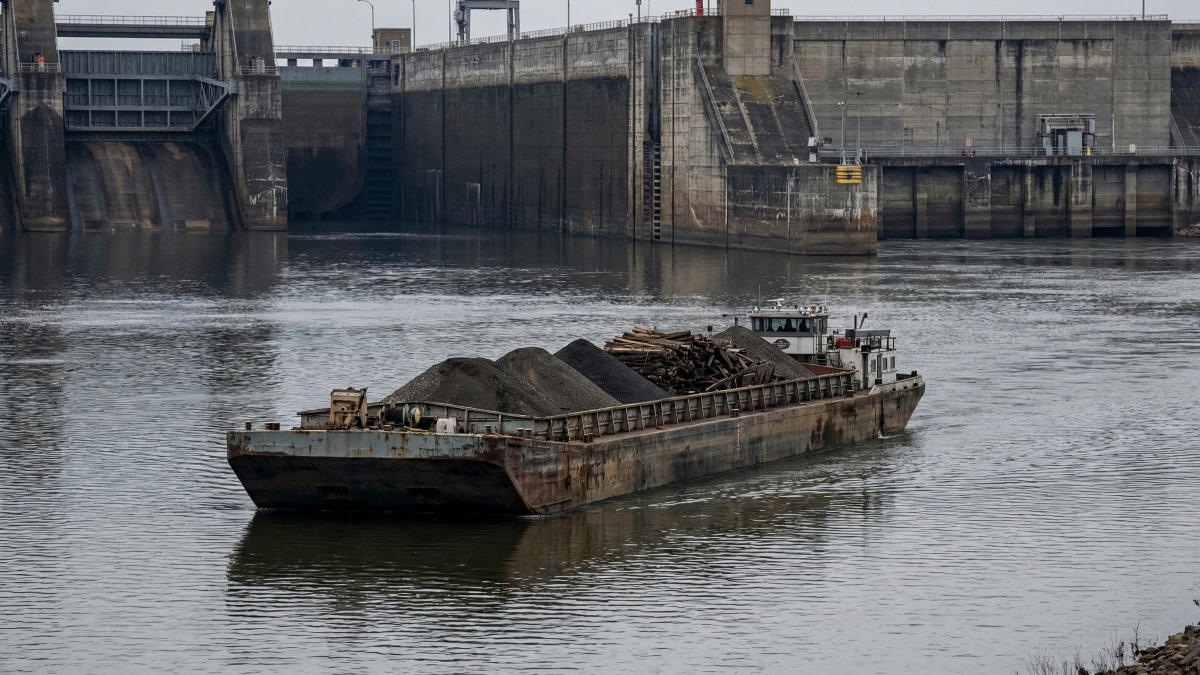
Declining water levels on the Irtysh River are threatening a significant portion of Kazakhstan’s river transport, including export shipments to Russia. The river accounts for up to 90 percent of all waterborne freight in the country, but unstable water levels and difficult navigation conditions in the Abai region create serious obstacles for logistics. A large-scale infrastructure project – the construction of a counter-regulator dam – is being considered to stabilize the water regime and unlock the region’s transit potential.
The Irtysh flows through three regions of Kazakhstan. While the channel from Pavlodar to Russian cities supports active water transport, the section in the Abai region has become a logistical bottleneck. During low-water periods, the minimum depth here drops to a critical 105 centimeters, making passage impossible for loaded vessels. By comparison, the river’s depth in Omsk, Russia, reaches 2.5 meters. Consequently, cargo from Russia must be transported by water only as far as Pavlodar, where it is reloaded onto railways, increasing costs and reducing the competitiveness of river transport against road and rail alternatives.
The primary factor influencing water levels is the operational regime of the Shulbinsk Hydroelectric Power Plant. Water discharges from the plant are managed to meet energy production needs rather than navigational requirements, leading to flow fluctuations, an unstable riverbed, and the formation of difficult shoals. The construction of a counter-regulator dam on the Irtysh is seen as a way to fundamentally change the situation, as the hydraulic structure would regulate the outflow from the HPP’s turbines by accumulating water and releasing it evenly.
The counter-regulator project is under active discussion by local administration and Kazakhstan’s Ministry of Transport. In 2024, attracting investment from Qatar was considered for the project, which could involve constructing a new Irtysh Hydroelectric Power Plant with a capacity of up to 350 MW to serve as the counter-regulator. To provide a scientific basis for the initiative, a contract was signed with the State Hydrological Institute of St. Petersburg to conduct mathematical modeling of problematic sections and develop engineering solutions. The findings will form a phased implementation plan intended to achieve a guaranteed depth of 1.6 meters on serviced sections in the East Kazakhstan, Abai, and Pavlodar regions.
Achieving a 1.6-meter depth would open the waterway to larger vessels and ensure stable transport throughout the navigation season. The Ministry of Transport projects that this could double freight traffic from the current 1.5 million tons, of which approximately 300,000 tons are destined for Russia. The development also requires modernizing coastal infrastructure, including ports and fueling stations, with plans to attract private investment. Kazakhstan and Russia have also signed a protocol on the joint use of the river and the synchronization of depths on transboundary sections.
In the interim, routine dredging continues. The Semey branch of the Kazakhstan Su Zholdary enterprise, with a staff of over 260, maintains difficult sections of the river. However, managing the effects of the HPP’s operations and natural conditions remains a considerable challenge without a regulatory dam. The river section from the Shulbinsk HPP to the village of Maytubek is characterized by unstable banks and a rocky bottom, requiring constant monitoring and the placement of navigational aids.