
Kazakhstan Hydropower Push Threatens UNESCO Heritage Sites
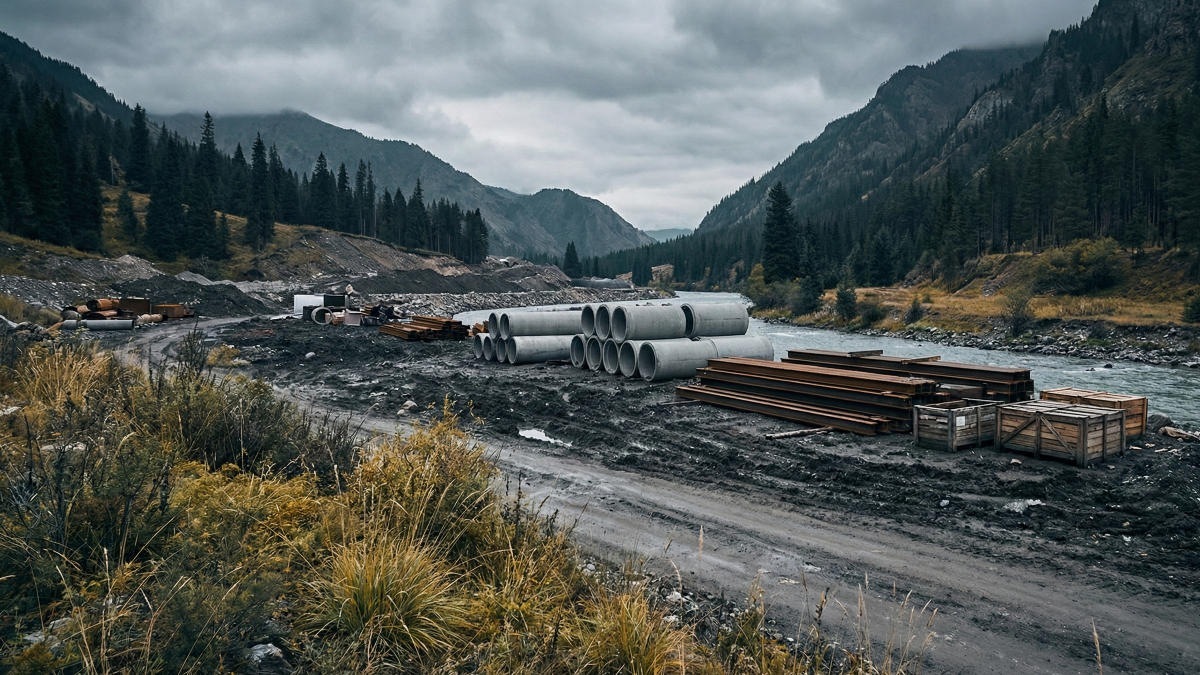
The government of Kazakhstan is advancing the design and cost estimation phase for a major water pipeline and a cascade of hydropower plants on the Ugam River in the Turkistan Region. The large-scale initiative is estimated to cost 191.7 billion tenge and is planned as a public-private partnership. However, the plans have met with significant opposition from environmental groups and experts, who point to severe risks for the country’s natural and historical heritage.
The Ugam River infrastructure plan includes a 12-kilometer tunnel, a 40-kilometer water pipeline, and a cascade of five hydropower plants intended to supply drinking water to five districts and generate 72 MWh of electricity. The Ugam River is a vital artery of Sairam-Ugam National Park, part of the Western Tien-Shan UNESCO World Natural Heritage site. The construction of dams and the alteration of the river’s hydrological regime threaten to fragment this unique ecosystem, eliminate endemic fish species, and disrupt the food supply for the snow leopard. The environmental coalition Rivers without Boundaries has issued warnings that the project could lead to the site’s removal from the UNESCO list or its reclassification to “in danger” status, as the plans would require changing protected area boundaries in violation of international commitments.
Separately, the Kazakh cabinet is preparing a resolution to add several new hydropower facilities to its list of strategic structures. This list includes planned plants on the Malaya Ulba, Kalzhyr, Koksu, Tentek, and Lepsi rivers in the East Kazakhstan and Zhetysu regions. The project on the Kalzhyr River is of particular concern, as its proposed construction site is located within the Ontüstik Altai state nature reserve. Current legislation prohibits any economic activity that threatens the preservation of the reserve’s natural complexes. Kazakhstan’s Ministry of Ecology previously confirmed in a response to Rivers without Boundaries that building a hydropower plant in this zone would be illegal, yet the project remains in national energy development plans.
An equally critical situation is developing on the Koksu River in the Zhetysu region. The river valley is a unique archaeological landscape containing the Eshkiolmes sanctuary–the largest collection of petroglyphs in the area and a site on UNESCO’s Tentative List. The construction of a hydropower cascade and reservoirs poses a direct threat of flooding ancient burial sites and settlements. Furthermore, the resulting changes in microclimate and increased humidity would inevitably accelerate the degradation of the rock art from lichen growth and stone erosion. Activists also highlight a practice of dividing large projects into smaller lots, a method which can allow developers to avoid full-scale state environmental and historical heritage impact assessments.
Amid these risks, Kazakhstan’s Ministry of Water Resources and Irrigation is proceeding with long-term planning documents. Basin-wide water protection plans are scheduled for development by the end of 2026, with a general integrated management plan to follow by 2027. Despite this, work with private investors on hydropower plant construction is already underway, outpacing the approval of a forecast water balance. The state enterprise Kazvodkhoz also intends to increase the number of small hydropower plants, having selected 29 prospective sites on existing water structures, despite calls from ecologists to first conduct a thorough strategic assessment of hydropower’s impact on biodiversity and cultural monuments.