
Failing Hydraulic Infrastructure Threatens North Kazakhstan
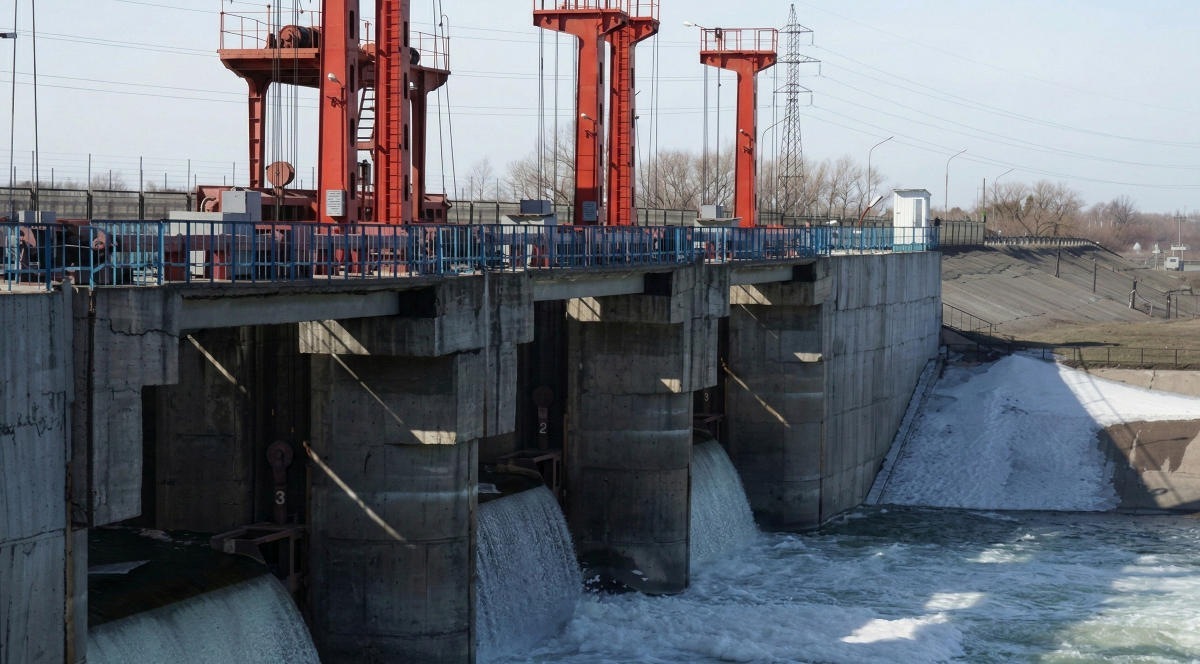
Two of the eighteen operational hydraulic structures in the North Kazakhstan Region are in an emergency state, with a third listed in unsatisfactory condition. The aging infrastructure, designed to control floodwaters and store water for arid periods, is failing to perform its functions due to significant deterioration. Ownership of the facilities is divided–-five are under national jurisdiction, twelve are managed by municipalities, and one is privately owned.
The most critical situation is at the Sharyk hydraulic facility in the Gabit Musrepov district. Managed by the state-owned enterprise Kazvodkhoz and designed to hold over eight million cubic meters of water, the dam developed a crack eight years ago. The breach allows 408 cubic meters of water per second to pass through. To prevent the flooding of five downstream settlements–-Madeniet, Kokalazhar, Ruzayevka, Andreyevka, and Chernobaevka–-the reservoir has been converted to a transit-flow mode. It no longer accumulates water, with the flow passing downstream unimpeded. Reconstruction of the Sharyk facility is estimated to cost 1.3 billion tenge and is not scheduled to begin before 2028.
A second facility in an emergency state is the water-lifting dam near the village of Tleusay in the Ualikhanov district. Its discharge system consists of three half-meter siphon pipes and a 1.5-meter flood spillway. While the pipes remain functional, the spillway is in urgent need of repair, compromising the entire structure. These technical defects prevent operators from accurately controlling water discharge volumes during seasonal spring floods.
Water flow management is also compromised at the pressure-regulating dam in the village of Yesil, Yesil district. The facility’s gates have been fixed in a raised position since construction was completed, removing it from the region’s water storage system. While the structure poses no immediate flood risk to nearby homes, its inability to function as a reservoir impacts the stability of the water supply for North Kazakhstan, a critical issue amid a changing climate that necessitates careful management of fresh water resources.