
Economic Potential and Strategic Risks of Afghanistan’s Qosh Tepa Canal
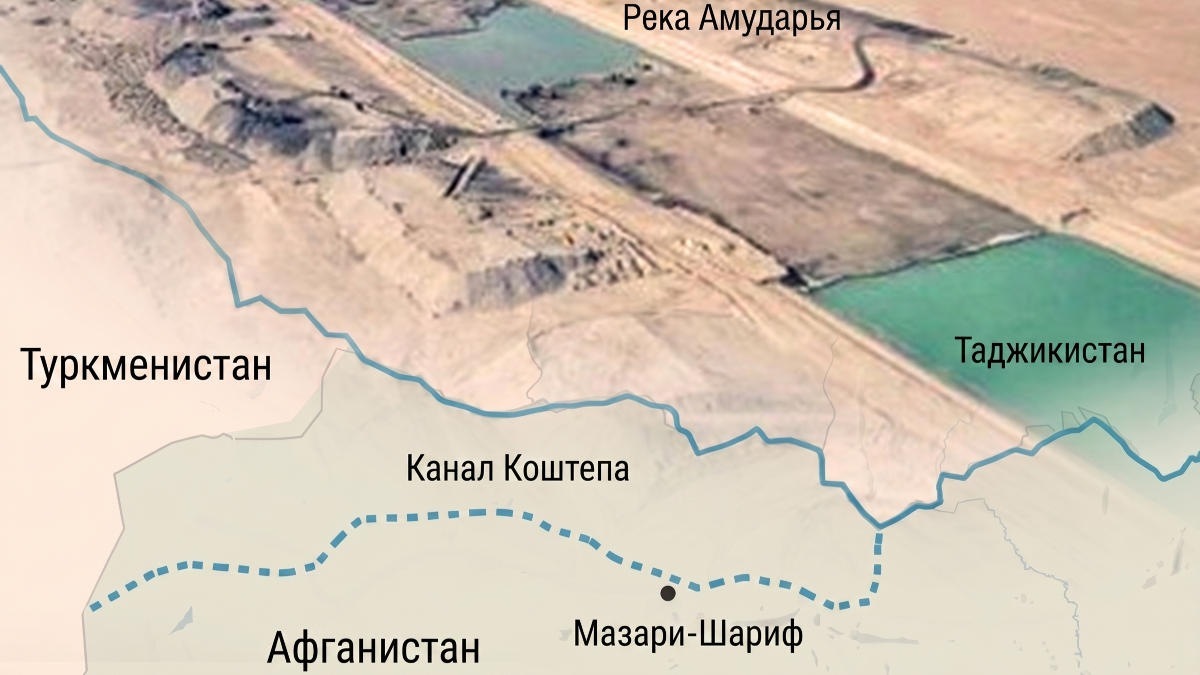
The Qosh Tepa Canal, one of the most significant irrigation initiatives in the history of Afghanistan, has the potential to convert more than 550,000 hectares of arid land into productive agricultural territory. This conversion – equivalent to approximately 1.2 million jeribs – could create hundreds of thousands of jobs and transform the northern region into a food basket for the country. Successfully executed, the project could ensure national food security and increase agricultural exports. However, if the project is utilized as a tool for ethnic resettlement or land fragmentation into small subsistence plots, the economic benefits of scale will be lost. Such a shift risks turning the canal into a source of ethnic discord, resource waste, and intensified regional social conflicts.
The Amu Darya river forms approximately 1,126 kilometers of Afghanistan’s northern border, with a basin that generates 70–79 billion cubic meters of water annually. While Afghanistan has the potential to utilize 20–25 percent of this surface water, its historical share has been extremely limited. Past agreements, such as Soviet Protocol No. 566, restricted the country’s intake to only 2.1 billion cubic meters per year, while downstream nations utilized the vast majority of the flow. Historically, the river has more often caused flood damage in provinces like Balkh and Kunduz rather than providing agricultural benefits.
The canal is designed to span 285–287 kilometers with a width of 100–152 meters and a depth of 8.5 meters. It begins in the Kaldar district of Balkh province and traverses Jawzjan and Faryab to reach the Andkhoy district. With a projected capacity of 650–668 cubic meters per second, the infrastructure is intended to transport and store between 6.37 and 13.02 billion cubic meters of water annually, with some estimates reaching 20.5 billion. The initial construction cost is estimated between $684 million–$1.5 billion and includes modern irrigation systems and small-scale hydroelectric dams.
The economic viability of the project depends on the transition from traditional subsistence farming to large-scale commercial agriculture. Commercial farming utilizes mechanization, high-quality seeds, and modern irrigation to achieve yields significantly higher than traditional methods. For example, modern commercial farms can produce six–eight tons of wheat per hectare, whereas traditional systems typically yield two–three tons. This transition follows the Lewis dual-sector model, where surplus labor is redirected from agriculture to the industrial sector, facilitating capital accumulation and broader economic development. By creating continuous land masses, the canal offers an opportunity to leverage these economies of scale, where fixed costs are reduced across larger areas, increasing market competitiveness.
At full operation, the canal is expected to provide 200,000–250,000 direct jobs and hundreds of thousands of indirect opportunities in processing, transport, and marketing. In development economics, every dollar invested in such projects can generate a multiplier effect of two–three dollars through increased farmer income and higher demand for industrial inputs. This growth is critical for a nation where approximately 25 percent of the population faces acute food insecurity. The project could reduce reliance on imported wheat, rice, and oil, while positioning Afghanistan as a regional agricultural exporter. These goals reflect similar successes seen during the Green Revolution in India and large-scale irrigation projects in China.
Significant risks remain regarding the management and potential politicization of the canal. Reports indicate that the Taliban administration intends to transfer oversight from the Ministry of Agriculture to the Administrative Affairs office, with land potentially allocated for the resettlement of returning refugees. Fragmenting the land into small family plots for subsistence farming would prevent mechanization and lead to a cycle of poverty. Historical precedents in Zimbabwe and Ethiopia demonstrate that land redistribution based on ethnic or political grounds rather than economic logic can result in decreased productivity and prolonged social tension. Such an approach could undermine national cohesion and create resistance among local Tajik, Uzbek, Hazara, and Turkmen communities in the north.
Technical and environmental challenges further complicate the project’s success. Rapid construction without adequate lining of the canal bed increases water loss and the risk of soil salinization. A 15–30 percent reduction in water flow to Uzbekistan and Turkmenistan could also impact the gross domestic product and employment levels of those countries. Without professional technical management and active water diplomacy, the project may exacerbate regional tensions rather than fostering cooperation. Inefficient management could result in the loss of billions of cubic meters of water and the waste of significant financial resources.
To maximize the canal’s potential, a scientific and inclusive management approach is required. Necessary measures include the creation of an independent governing board with international and domestic expertise and the prioritization of commercial farming models over ethnic land distribution. Development should focus on the full value chain for strategic crops – including production, processing, and marketing – alongside the introduction of modern irrigation technologies. Active diplomacy with Central Asian neighbors is essential for the joint management of the Amu Darya basin. Rivers without Boundaries indicates that transparent management based on technical merit and national integration is the only path to achieving sustainable food self-sufficiency and social cohesion.