
Hydropower Development Risks Koksu River Ecosystem and Cultural Heritage
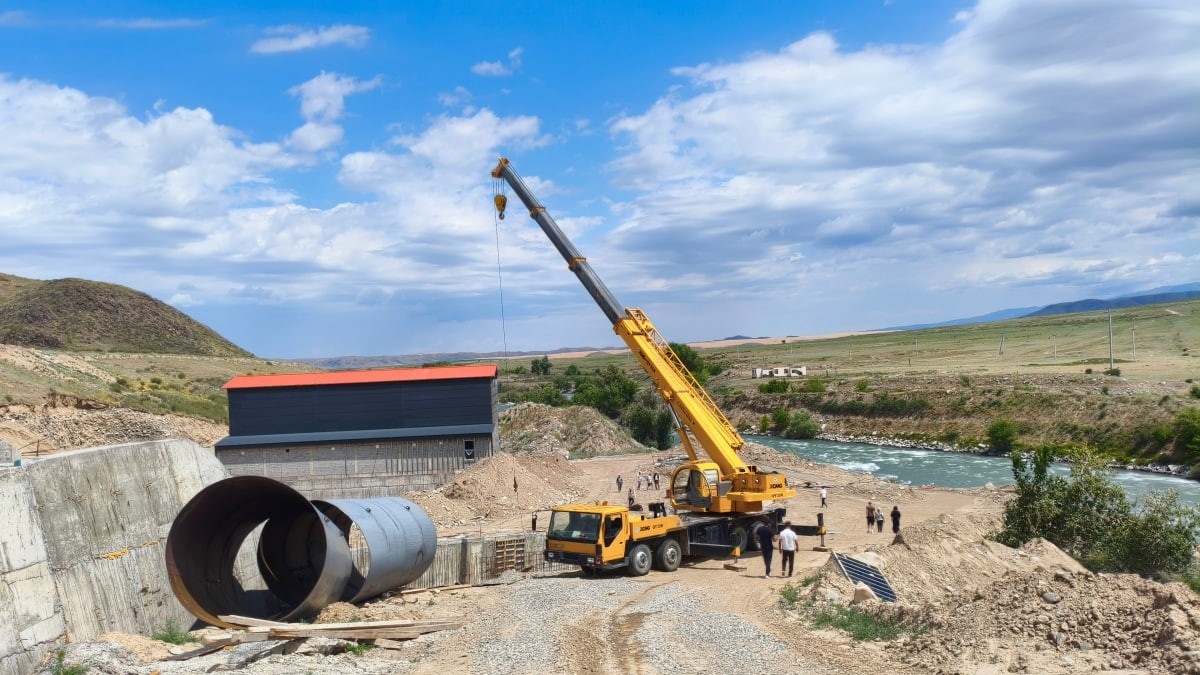
The Koksu River, one of the last major free–flowing rivers in the Balkhash basin, is currently the site of a large–scale infrastructure reorganization. Under the banner of green energy development, multiple small hydropower plant (HPP) cascades are being implemented or planned. These projects threaten to radically alter the region’s natural and historical–cultural landscape through the cumulative impact of ten HPPs that fragment the river system and disrupt unique archaeological sites.
At least ten facilities are under construction or planned for the Koksu and its tributaries. While individual projects are presented as having minimal environmental impact, their combined presence threatens to irreversibly transform the river ecosystem. These small HPPs segment a unified river system into isolated sections using diversion schemes that extract water from the natural channel and return it downstream via pipes. This process leaves multi–kilometer stretches of the riverbed nearly dry during low–water periods.
This transformation creates insurmountable barriers for the migration of fish and other aquatic organisms. The loss of natural water cycles leads to the degradation of spawning grounds and the destruction of tugai forests. This development endangers the biodiversity of the Balkhash basin and the recreational potential of the Koksu, which is utilized for rafting, sport fishing, and ecological tourism.
Hydropower projects are being sited within protected natural areas and near archaeological monuments on Kazakhstan’s tentative list for UNESCO World Heritage status. On the Koktal River, the 8.8–megawatt Koktal HPP–1.1 is under construction within the Upper Koksu protected area, jeopardizing the hydrological regime and the regeneration of tugai forests. Three additional stations – Koktal HPP–1.2, HPP–1.3, and HPP–2 – are planned for the same river by 2030 with a total capacity of 22.6 megawatts.
On the Koksu itself, the Rudnichnaya HPP cascade affects 12 kilometers of the riverbed near the settlement of Rudnichny. The 23.2–megawatt Eskeldinskaya HPP cascade is located in the foothills where native fish species are most concentrated. Early construction has already damaged coastal forests, and the planned reservoir threatens a canyon containing high–value archaeological sites.
Economic evaluations indicate that most stations utilize only a small fraction of the river’s natural elevation drop. Despite a low capacity factor, the ecological costs are high. Construction sites utilize standardized Chinese equipment and are managed by Chinese contractors using Chinese capital. This trend occurs as China implements a domestic program to dismantle thousands of similar small HPPs due to their ecological inefficiency in high–value conservation areas.
Rivers without Boundaries has concluded that the fragmentation of the river by multiple small stations leads to its total destruction. The Koksu valley contains an exceptional concentration of historical monuments, yet results of historical–cultural expertise are not currently subject to public disclosure or local government approval. Investigations indicate that burial mounds are being excavated during the feasibility study phase, prior to the conclusion of public hearings or final project approval.
The valley represents a unique archaeological complex featuring burial mounds, settlements, and camps from the Sak, Usun, Turkic, and Dzungar periods. These sites are already vulnerable to natural erosion, and industrial development increases the risk of permanent loss. There are proposals to introduce a legal concept of ‘historical crime’ into the Kazakhstani criminal code to protect such heritage.
Legal disputes are ongoing between the Koksu district administration and developers regarding land allocation, yet preparatory work and geological surveys continue without full local government oversight. The potential for a dam up to 120 meters high raises concerns about the flooding of agricultural lands and the loss of water for irrigation, which is vital for the local economy.
Public documentation for the Verkhne–Talaptinskaya HPP indicates the project received environmental approval in 2022, with construction slated for completion by April 2025. District authorities have declined to address current ecological and cultural concerns raised by civil society and environmental experts.