
Climate change reduces electricity generation at Dams in Tajikistan
Global climate change is having an increasingly noticeable impact on Tajikistan’s energy security, creating serious challenges for the country’s hydropower sector. Mahmud Mirzoen, an employee of the Ministry of Energy and Water Resources of the Republic, spoke about the direct dependence of electricity generation on natural factors. Since the foundation of the state’s energy system is the water resources of mountain rivers, the volume of generation is inextricably linked to the hydrological situation, which is becoming increasingly difficult to predict.
According to the expert, the production of electricity in the republic directly correlates with the water level in the rivers, the amount of precipitation and the temperature regime. In modern conditions, it is extremely difficult to predict these natural factors in practice. The situation is aggravated in the autumn-winter period, when depletion of water reserves is traditionally observed in the Vakhsh River basin. This natural decline occurs against the background of an annual increase in demand for electricity from both the population and socio-economic sectors, which leads to seasonal energy supply shortages.
In an interview with the Khovar news agency, a representative of the ministry stressed the regional scale of the problem. This year, in all countries of Central Asia, including Tajikistan, there was a low amount of precipitation and no snowfall necessary for the formation of water reserves. Experts call climate change the main cause of drought events. Over the past decades, the average annual air temperature in the world has increased by 1.2 degrees, which makes significant adjustments to the operation of hydroelectric power plants.
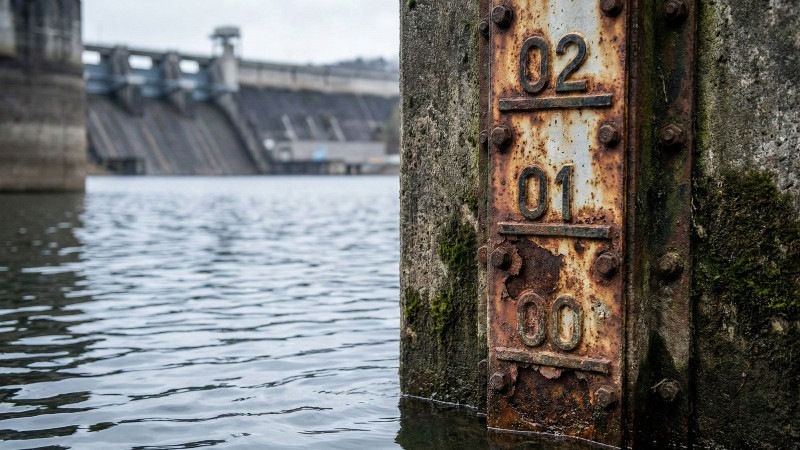
The problem is particularly acute at key generation facilities. A specialist of the Ministry of Energy said that at the Nurek Dam, the main electricity producer in the country, the water level dropped by more than 3.5 meters. This is due to a violation of the usual balance of inflow and outflow of water resources. Forecasting the reservoir capacity in the current realities is becoming a non-trivial task for power engineers.
Statistics of water consumption clearly demonstrates the seasonal imbalance. If in summer the average flow rate in the Vakhsh River basin is 2000-2200 cubic meters per second, then in winter this figure drops to 150-200 cubic meters. This season, the situation has worsened: the inflow of water has decreased by 80 cubic meters per second compared to October and November of this year. As a result, over the same day, the water level in the Nurek reservoir, located in the south of the republic, showed a significant decrease, which jeopardizes the stability of power supply during peak loads.
Original (in Russian): Изменение климата снижает выработку электроэнергии на ГЭС Таджикистана