
Concrete instead of nature: projects of new HPPs in Kazakhstan cause criticism of environmentalists
The Government of Kazakhstan has started the active phase of developing design estimates for the construction of a water pipeline and a cascade of hydroelectric power plants on the Ugam River in the Turkestan region. As Minister of Water Resources and Irrigation Nurzhan Nurzhigitov said at a government meeting on Wednesday, the cost of implementing a large-scale initiative is estimated at 191.7 billion tenge, and the project itself is planned to be implemented as part of a public-private partnership. However, plans to develop the country’s hydropotential have faced serious objections from the environmental community and experts pointing out the risks to natural and historical heritage sites.
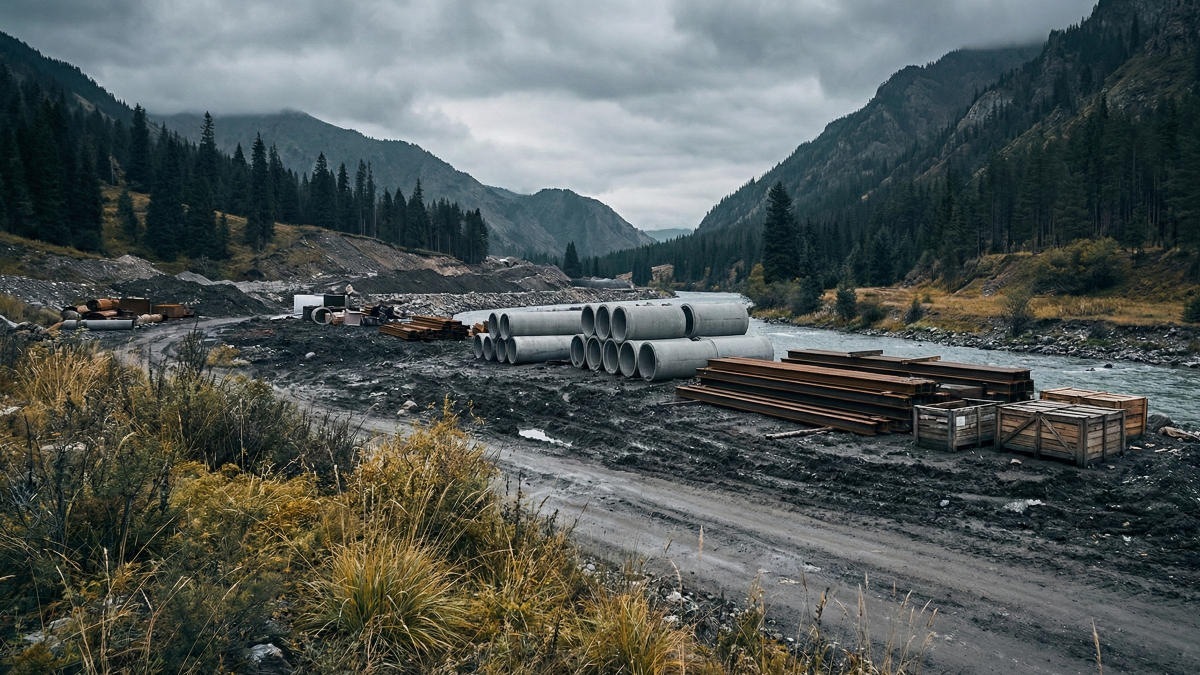
The infrastructure plan on the Ugam River provides for the laying of a 12-kilometer tunnel and the construction of a 40-kilometer-long water pipeline with a cascade of five hydroelectric power stations. It is expected that the system will provide drinking water to five districts of the region and generate 72 MW/h. At the same time, the Ugam River is a key artery of the Sairam-Ugam National Park, which is part of the UNESCO World Natural Heritage Site “Western Tien Shan”. The construction of dams and changes in the hydrological regime threaten the fragmentation of a unique ecosystem, the disappearance of endemic fish species and the disruption of the snow leopard’s food supply. The ecological coalition “Rivers without Boundaries” has repeatedly warned that the implementation of the project could lead to the exclusion of the site from the UNESCO list or its transfer to the status of “endangered”, as the plans require changing the boundaries of protected areas, which contradicts international obligations.
At the same time, the Cabinet of Ministers of Kazakhstan is preparing a resolution on the inclusion of a number of new hydraulic engineering facilities in the list of strategic structures. This list includes planned hydroelectric power plants on the Malaya Ulba, Kalzhyr, Koksu, Tentek and Lepsi rivers in the East Kazakhstan region and the Zhetysu region. The situation with the HPP project on the Kalzhyr River is of particular concern. The site allocated for construction is located on the territory of the Ontustik Altai State Nature Reserve. According to the current legislation, any economic activity that threatens the preservation of the natural complexes of the reserve is prohibited. The Ministry of Ecology of the Republic of Kazakhstan, in response to a request from Rivers Without Boundaries, previously confirmed that the construction of a hydroelectric power station in this zone is illegal, but the project continues to appear in energy development plans.
The situation is no less acute around the development of the Koksu River in the Zhetysu region. The river valley is a unique archaeological landscape, where the sanctuary of Eshkiolmes is located — the largest collection of petroglyphs included in the UNESCO tentative list. The construction of a cascade of hydroelectric power stations and the creation of reservoirs carries a direct threat of flooding of ancient burials and settlements. In addition, a change in the microclimate and an increase in air humidity due to new reservoirs will inevitably accelerate the destruction of rock carvings as a result of lichen growth and stone erosion. Public activists also point to the practice of splitting large projects into small lots, which allows avoiding a full-scale state environmental assessment and assessment of the impact on the historical heritage.
Against the background of these risks, the Ministry of Water Resources and Irrigation of Kazakhstan continues to work on long-term planning documents. It is planned to develop basin water protection plans by the end of 2026, and a master plan for integrated management by 2027. Nevertheless, work with private investors on the construction of hydroelectric power plants is already underway, ahead of the approval of the forecast water balance. The state-owned enterprise Kazvodkhoz also intends to increase the number of small hydropower plants by selecting 29 promising sites on existing facilities, despite calls from environmentalists to conduct a thorough strategic assessment of the impact of hydropower on biodiversity and cultural monuments.
Original (in Russian): Бетон вместо природы: проекты новых ГЭС в Казахстане вызывают критику экологов